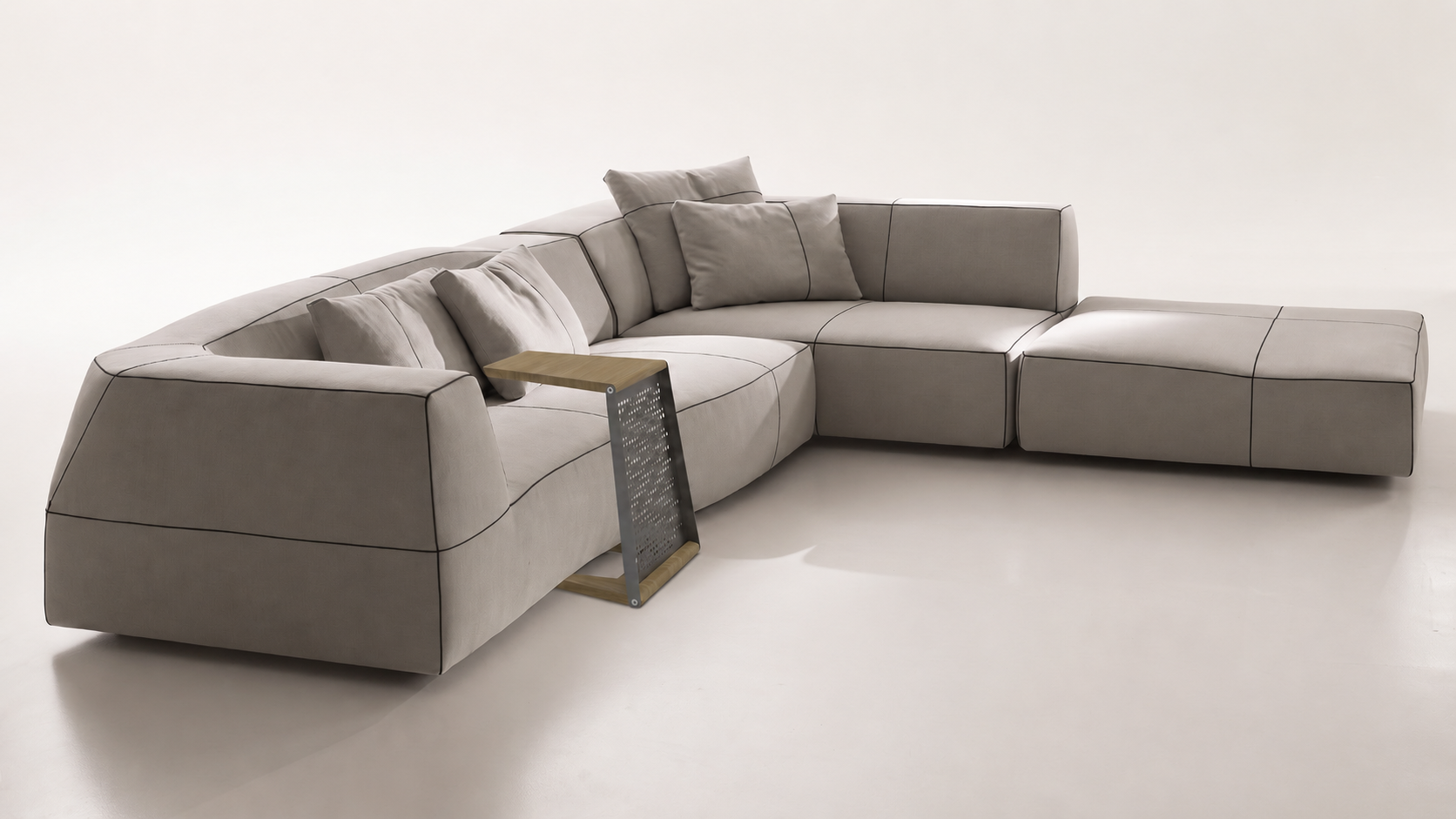

A coffee table that ships flat, stores flat, hides inside an armchair armrest — and stands stable through geometry alone when you need it.
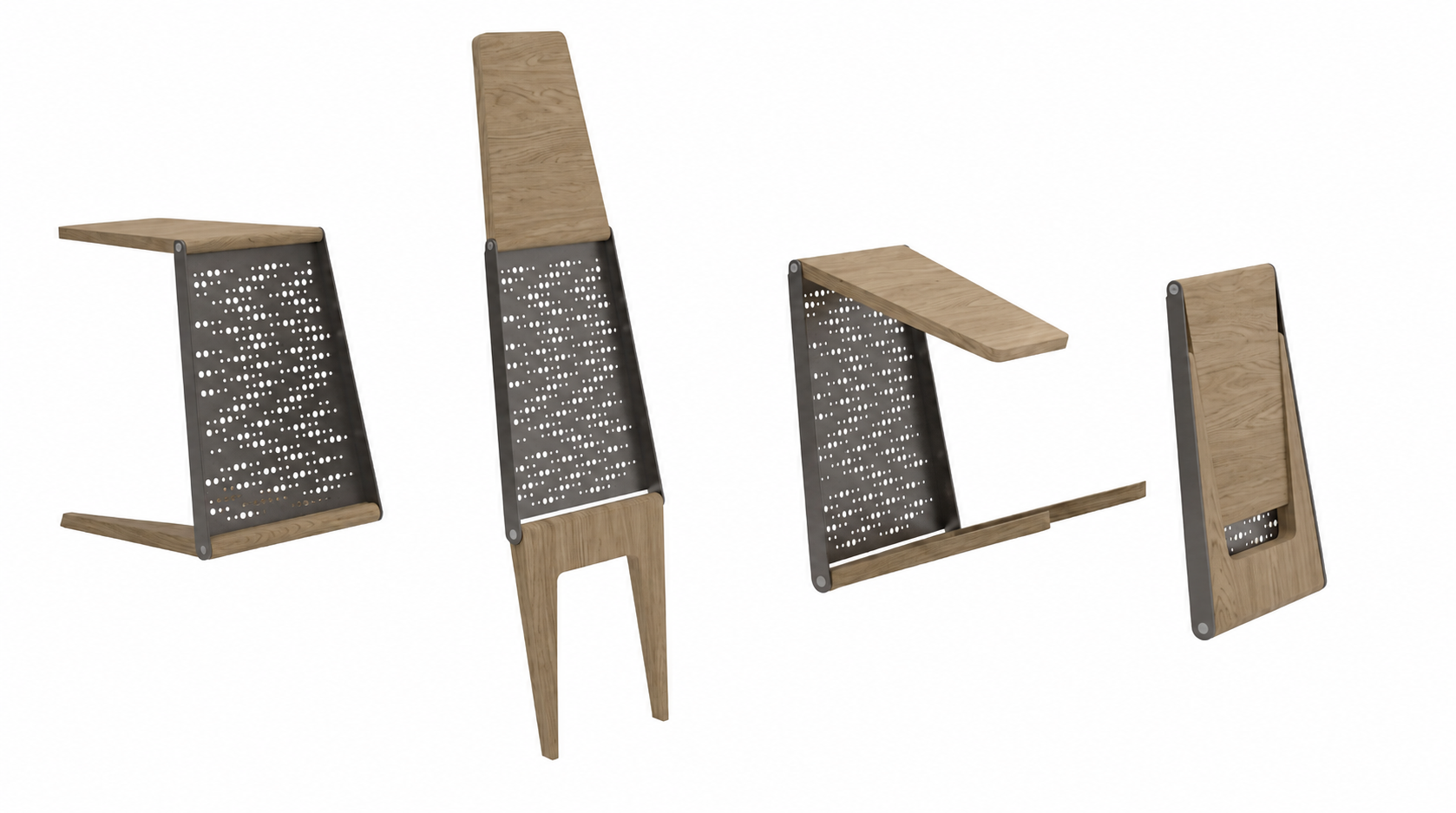
Coffee tables take up space when you need them and when you don't. Flat Coffee Table solves both problems: folded, it collapses completely flat — eliminating storage bulk and the shipping costs and logistics that come with conventional furniture. Unfolded, a single wooden panel provides both the legs and the tabletop, locked into stability by the geometry of the bent metal base it mounts onto.
In its most integrated form, the table slides into a specially designed armchair armrest — like a tray table on a flight seat — appearing only when needed and disappearing completely when not.

The starting point was a genuine inefficiency in how furniture is shipped, stored, and used: a coffee table occupies volume in all three states, even when it's providing no value. Flat Coffee Table treats that inefficiency as the design problem — and solves it at the structural level, rather than adding a storage solution on top of a conventional design.
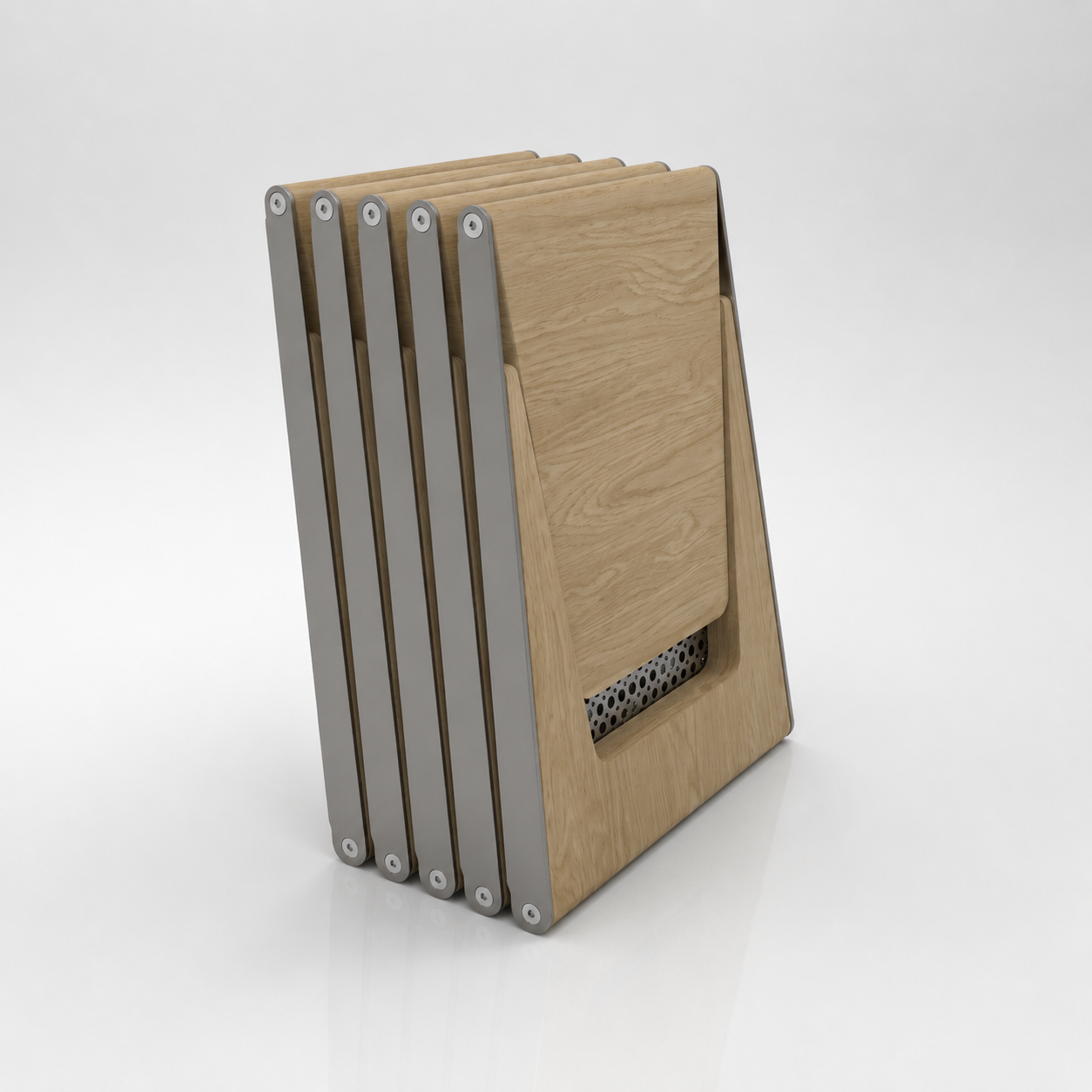
The bent metal base stays fixed and unchanged. The single wooden panel — which becomes both legs and tabletop when deployed — folds in the opposite direction for storage, bringing the entire product to a completely flat profile. Stability in use comes from the geometric relationship between the metal base and the panel, not from any additional locking mechanism.
A coffee table that disappears when you don't need it is worth more than one that just looks good.
Idea
Most furniture solves one problem — function — and creates another: the space and logistics it occupies when not in use. Flat Coffee Table was designed to solve function, storage, and shipping simultaneously, from the same structural decision. One panel, one bent metal base, one geometric relationship that makes all three possible.
Form
The bent metal sheet forms the permanent structural base — its geometry is fixed, and its bends create the precise angles that allow the wooden panel to lock into a stable table configuration when opened in the opposite direction. The wooden panel is cut from a single piece: legs and tabletop from one material, one cut, one component.
When the armrest integration is applied, the table slides into a lidded armchair armrest exactly as a tray table emerges from an aircraft seat — fully concealed when closed, fully functional when open.
Function
In use: a stable, fully functional coffee table suitable for living rooms. Folded: completely flat — storable under a bed, behind a door, or inside a purpose-built armrest. In transit: ships as a flat package, eliminating the dimensional weight surcharges and protective packaging requirements that make furniture logistics expensive.
The armrest integration option creates a genuinely new furniture typology: seating and surface combined into one object, where the table exists only when called for.
Differentiation
Foldable tables exist. But most folding furniture either sacrifices visual quality to achieve flatness, or achieves flatness through a complicated mechanism that adds cost and failure points. Flat Coffee Table achieves its flat profile through the geometry of the panel itself — no additional mechanism, no visual compromise, no separate locking system.
The armrest integration has no direct precedent in residential furniture — the concept borrows from aviation seating logic and applies it to the living room, opening a new product category at the intersection of seating and surface.
Impact
A fully designed concept ready for licensing or production — addressing furniture brands, direct-to-consumer logistics-first brands, and sofa or armchair manufacturers looking to offer an integrated surface solution alongside their seating.



The structural problem — getting a table to stand stably using only the geometric relationship between a bent metal base and a folding wooden panel, with no added locking mechanism — required working through the angles until the geometry itself provided the stability. That precision is what made the concept viable: a mechanism that relies on geometry rather than hardware is simpler, cheaper, and more durable than one that doesn't.
The armrest integration was the concept's second challenge: finding a furniture typology where a surface could be completely hidden inside seating without making either the seating or the surface worse. The aircraft tray table solved this problem decades ago — applying the same logic to a domestic armchair was the insight worth pursuing.
A complete concept — a coffee table that ships flat, stores flat, optionally disappears inside an armrest, and stands stable through geometry alone. Ready to license to furniture brands, logistics-first DTC brands, or seating manufacturers looking to add an integrated surface to their lineup.
The design and strategy are complete. This concept is ready to license today — get in touch, or let's bring it to market together.