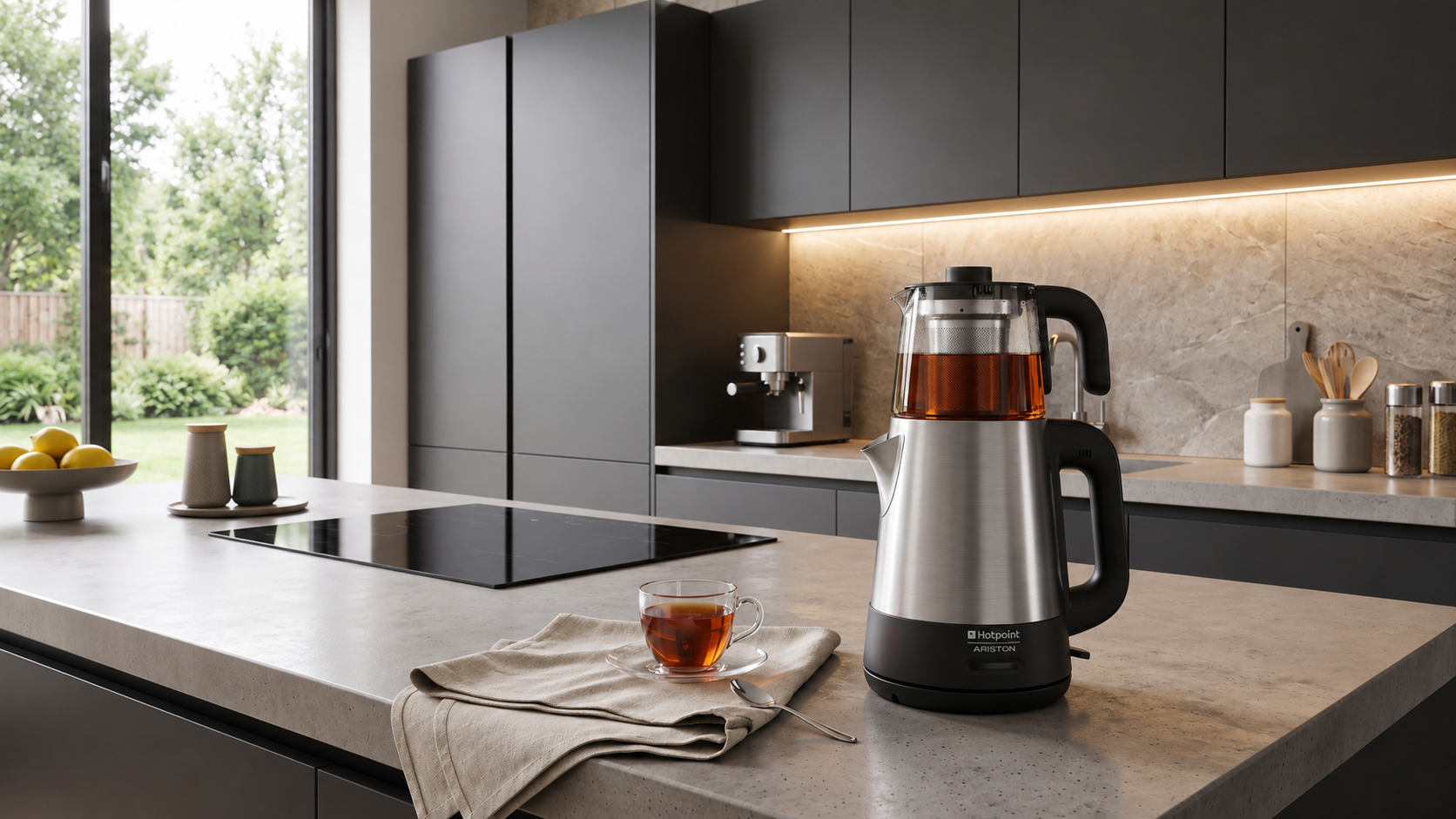
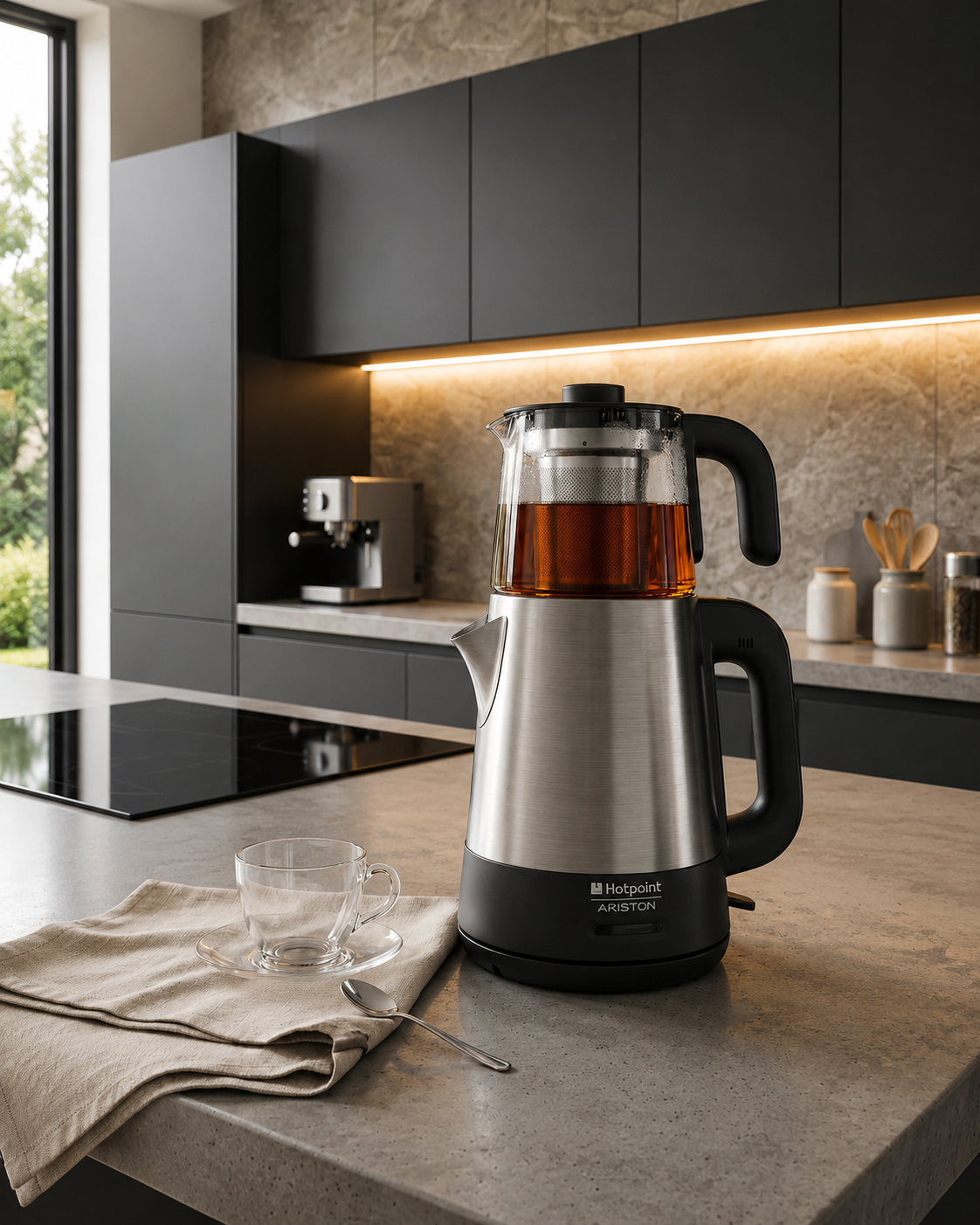
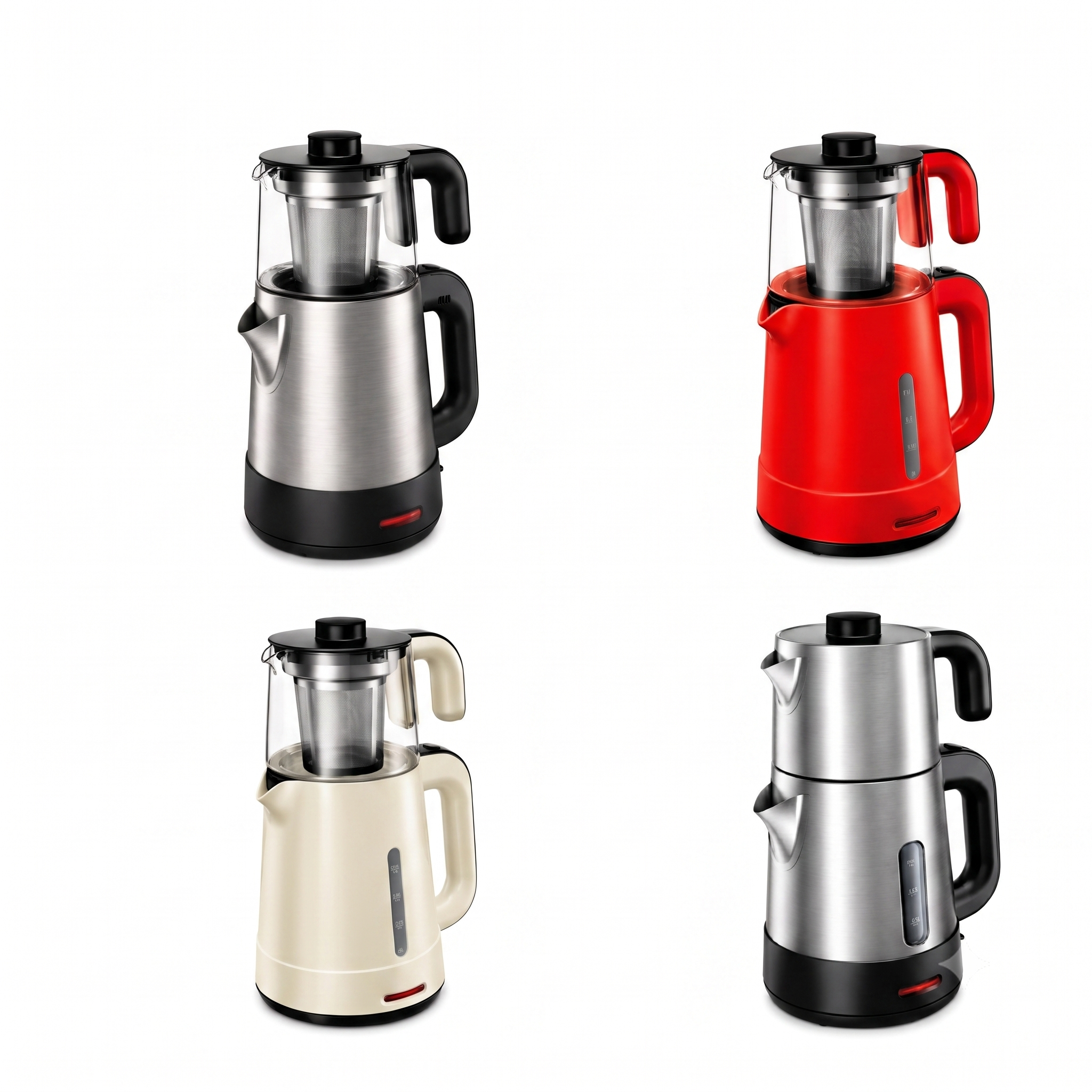
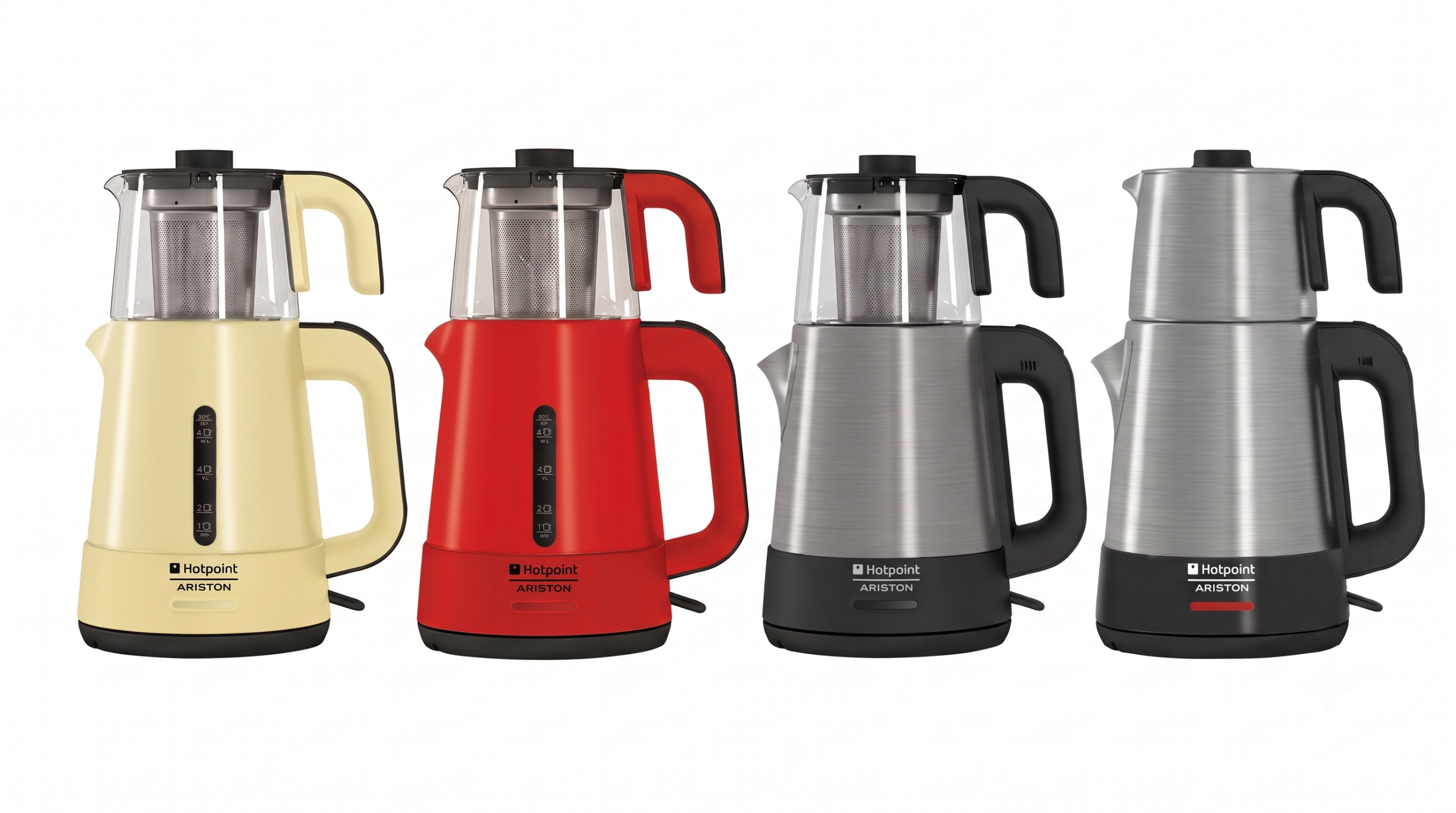
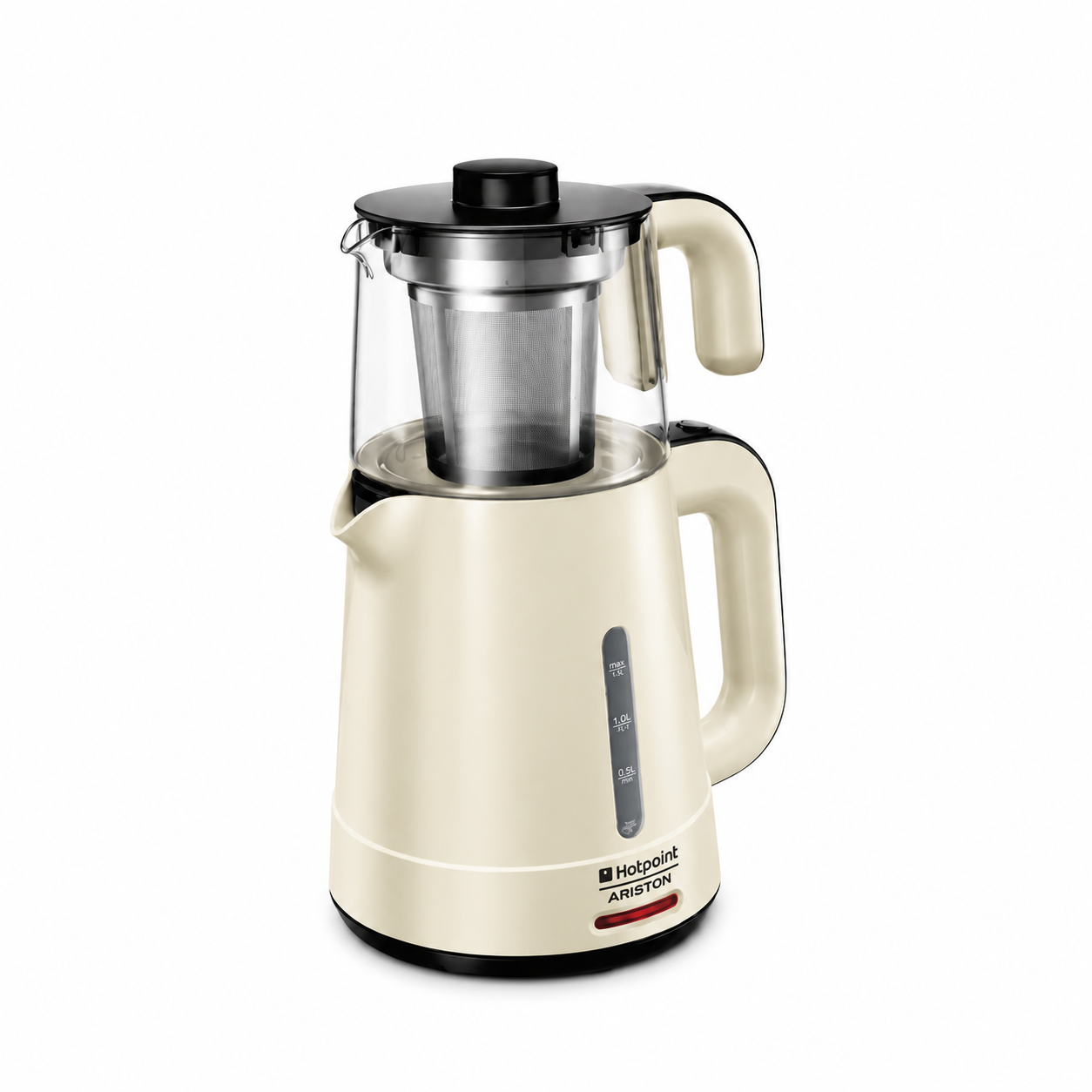
Four models designed to feel like they were always part of the range — in plastic and stainless steel, across the full width of Hotpoint Ariston's small appliance lineup.
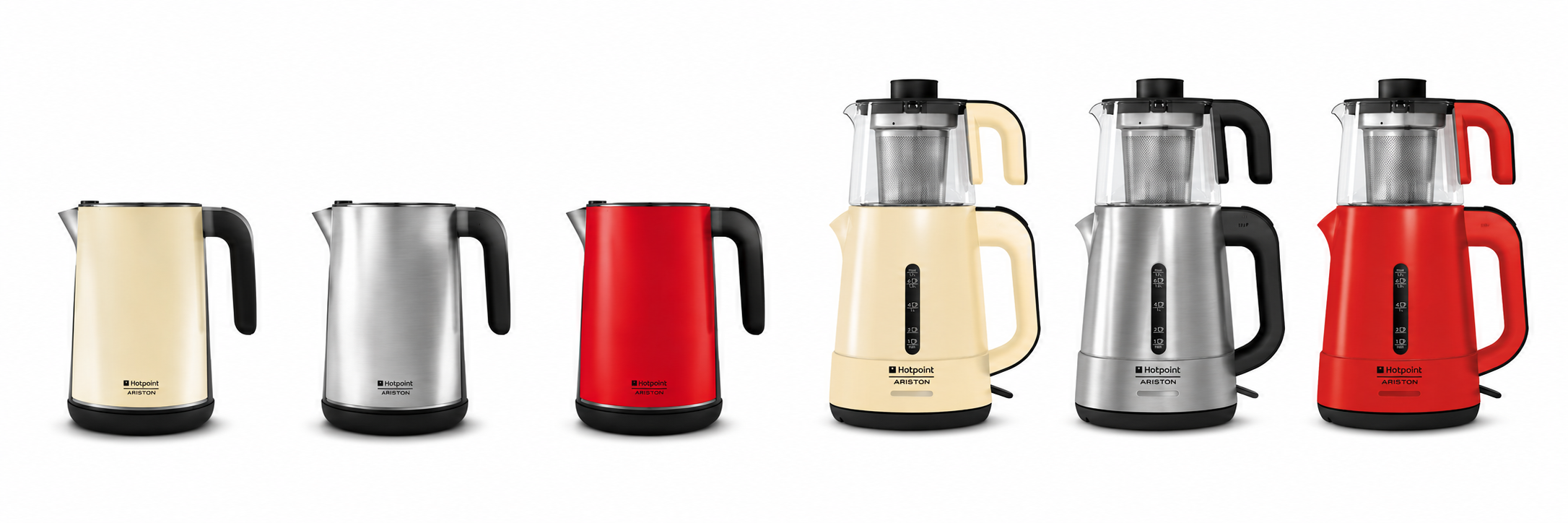
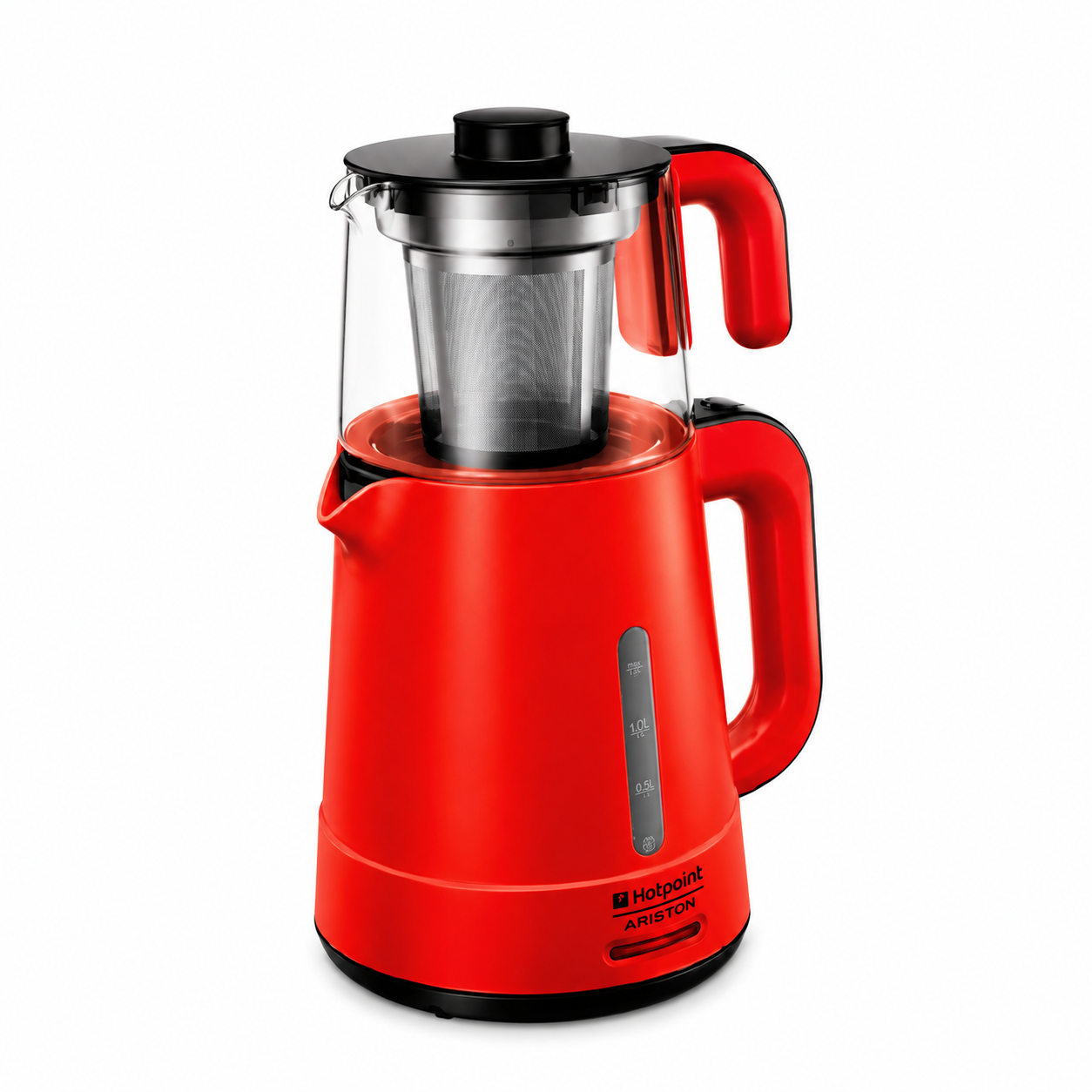
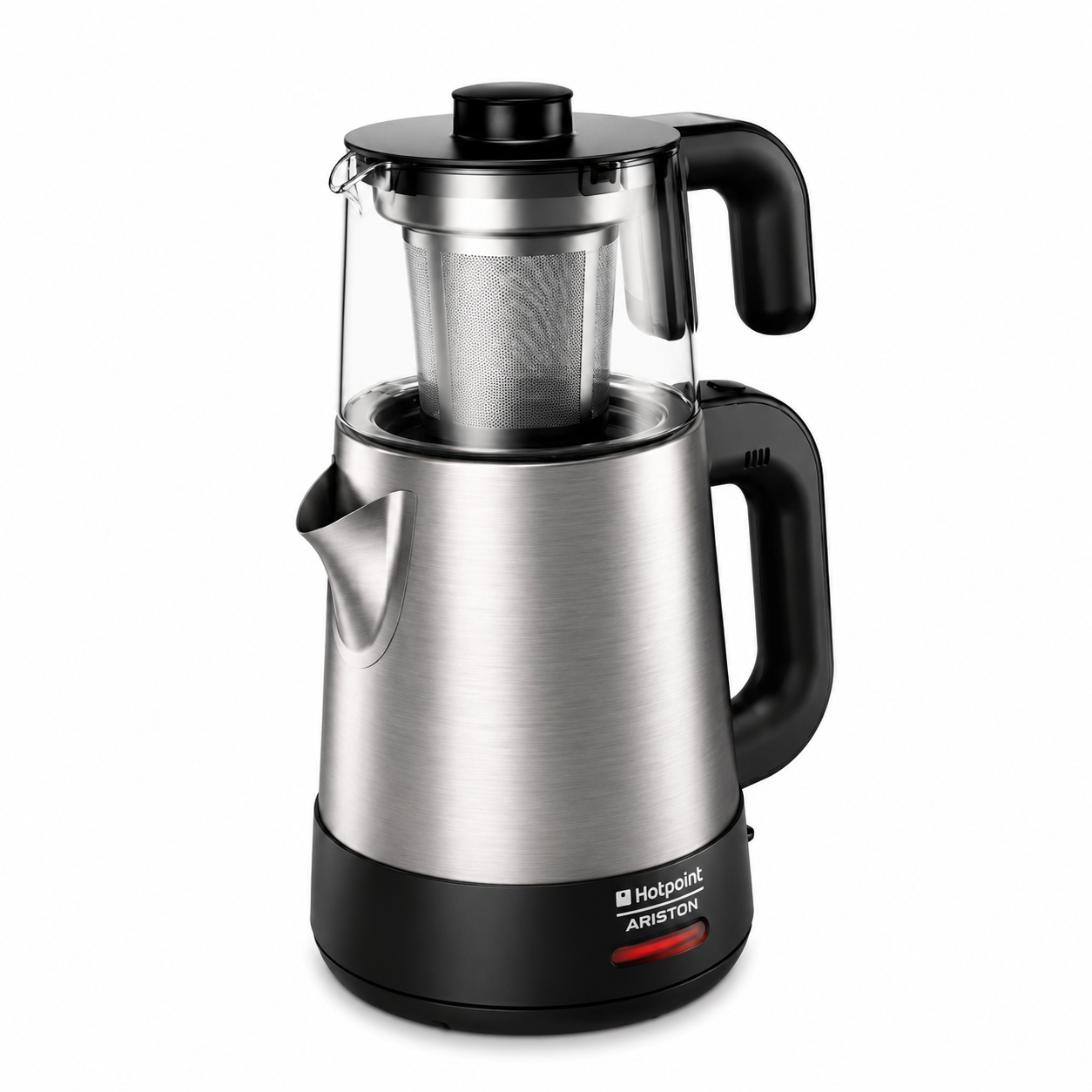
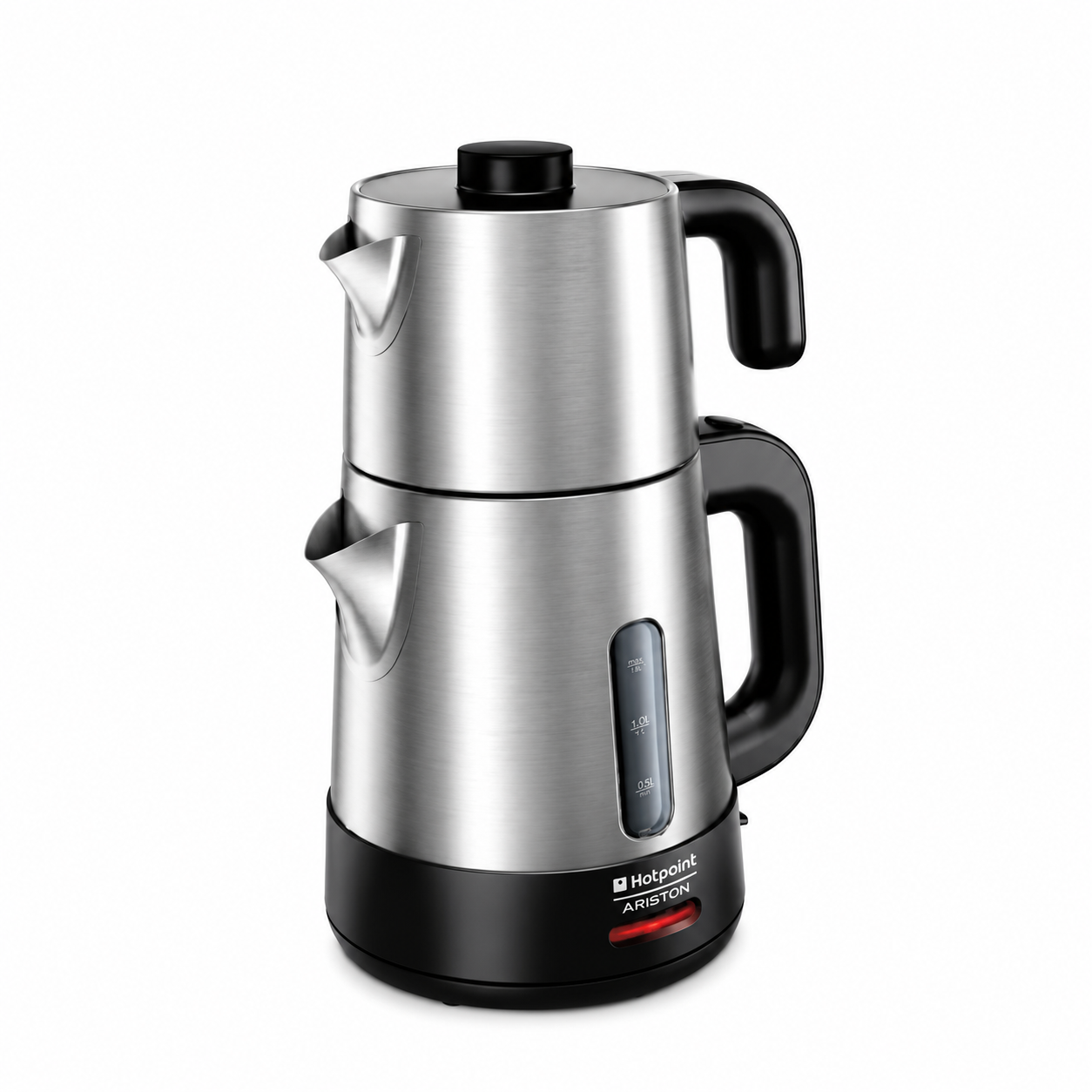
Hotpoint Ariston came to me wanting to expand their tea maker range — four models in plastic and stainless steel that would sit alongside their existing small appliance lineup without visual friction. The brief wasn't about a new direction; it was about extending an existing one, seamlessly.
The series stayed in their product range for years. The highest compliment the client offered at the end was that the designs felt like they could only have come from within — as if Hotpoint Ariston's own design team had developed them.
Designing within an established brand language is a different discipline than starting from zero. The task wasn't to bring something new — it was to understand what already existed deeply enough to extend it credibly, so that four new products felt like they had always belonged in the range.
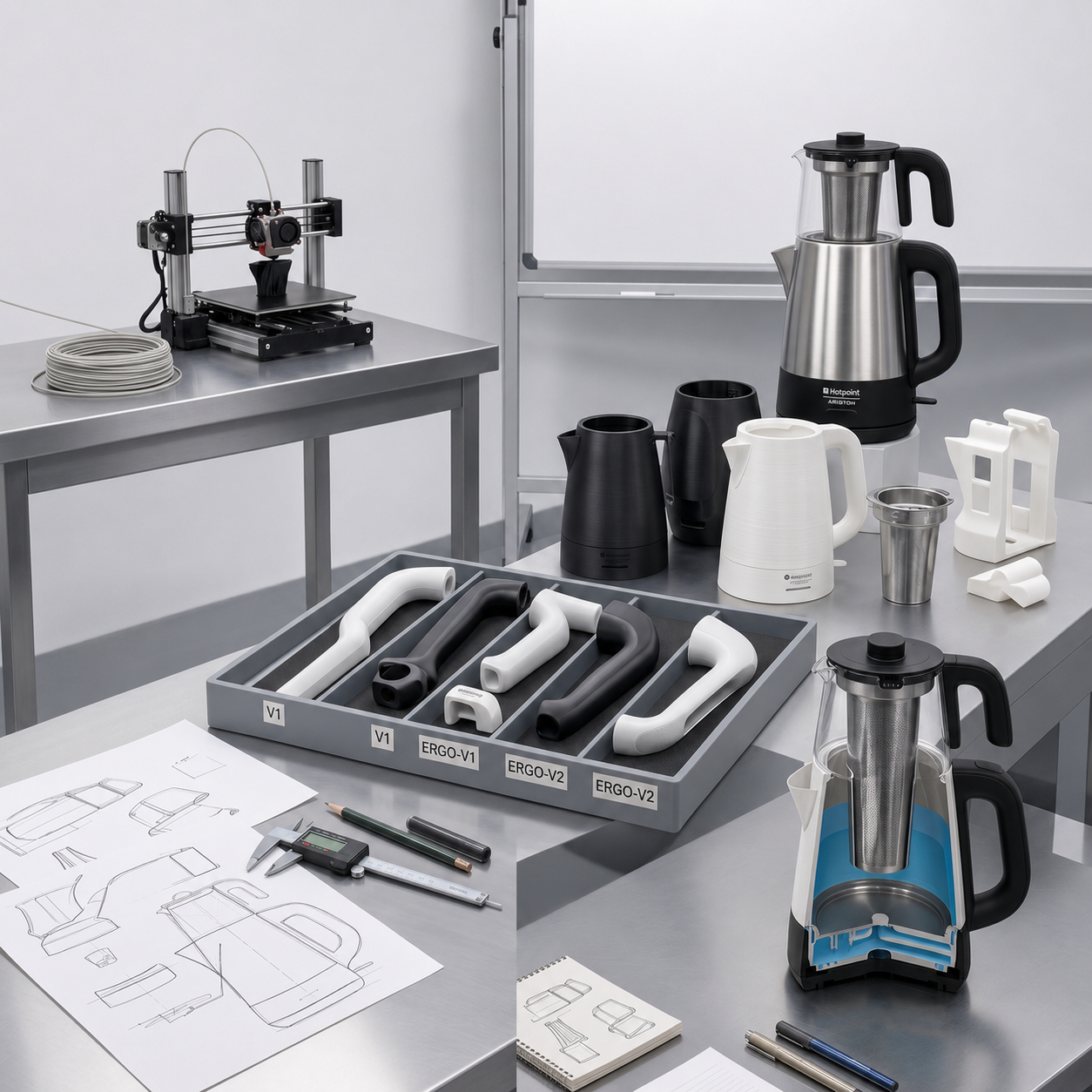
Working closely with Hotpoint Ariston's internal design team made this possible. That collaboration — understanding their constraints, their proportions, their surface language — is what turned external work into something that read as internal.
The best brand extension is the one that makes you forget it was ever added.
Idea
Hotpoint Ariston needed to grow their tea maker offering without disrupting the coherence of an already established small appliance family. Four models — spanning plastic and stainless steel finishes — had to cover different price points and user needs while reading as one consistent series.
Form
Simple, minimalist forms aligned to Hotpoint Ariston's existing design language — the same proportional logic, the same surface treatment approach, the same balance between plastic and stainless elements that defined the rest of their lineup. Nothing that announced itself as foreign to the range.
Function
Four models across two material families — plastic and stainless steel — to cover the full breadth of Hotpoint Ariston's market positioning. Each model carried all the core functions the tea maker category requires, matched to the expectations of its respective price tier.
Differentiation
The differentiation here wasn't between this series and the competition — it was between the coherence of the range before and after. A brand's product lineup reads as stronger when every addition feels inevitable rather than opportunistic, and that's what this series delivered: four models that made the range feel more complete, not more crowded.
Impact
The series remained in Hotpoint Ariston's lineup for years. At project close, the client said the designs felt as though they could only have been developed by their own team — the clearest possible confirmation that the brand integration had worked.
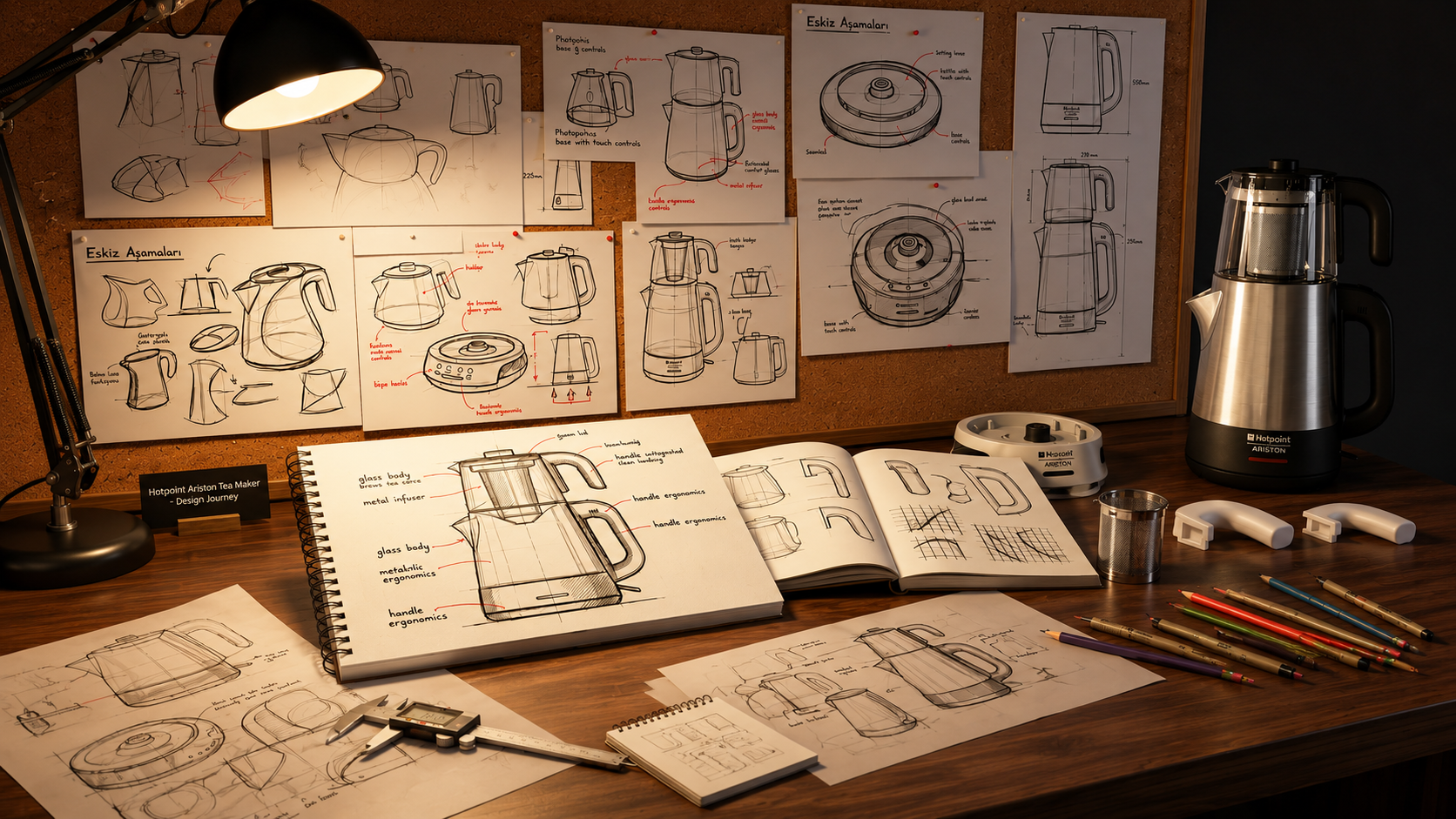
The discipline of designing within someone else's language — rather than establishing your own — is one of the harder things to do well in product design. Every decision had to be filtered through a question I wasn't used to asking: "does this feel like Hotpoint Ariston, or does it feel like me?"
Working directly with their internal design team was the thing that made it work. Understanding their constraints from the inside — not from a brief alone, but from the conversations that happen in the margins of one — is what allowed four external designs to read as something that had always been there.
Four tea maker models across plastic and stainless steel, integrated into Hotpoint Ariston's small appliance range and sold for years — a series that expanded a lineup without disrupting it, and earned the highest possible verdict from the client: it felt like their own.