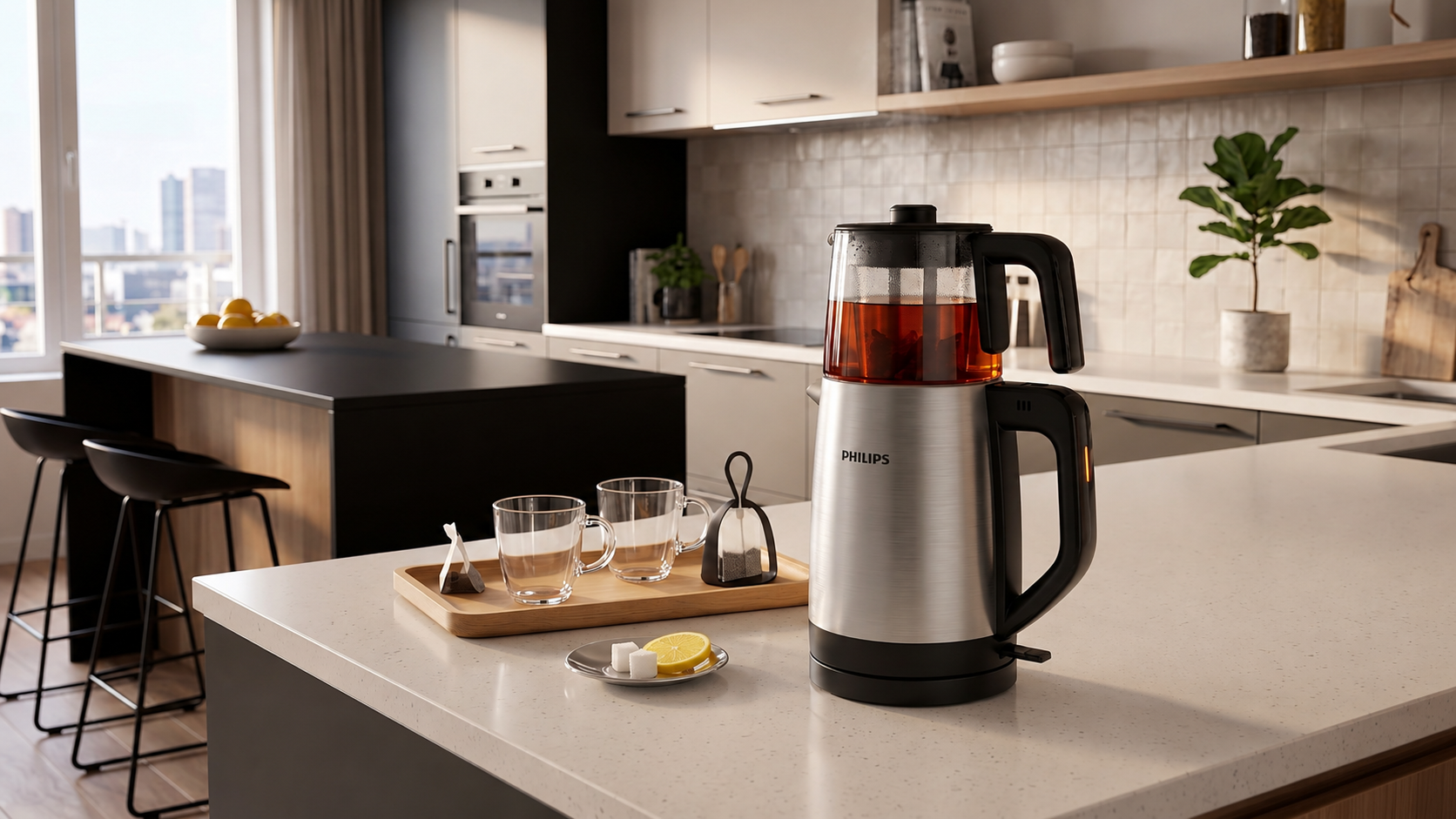
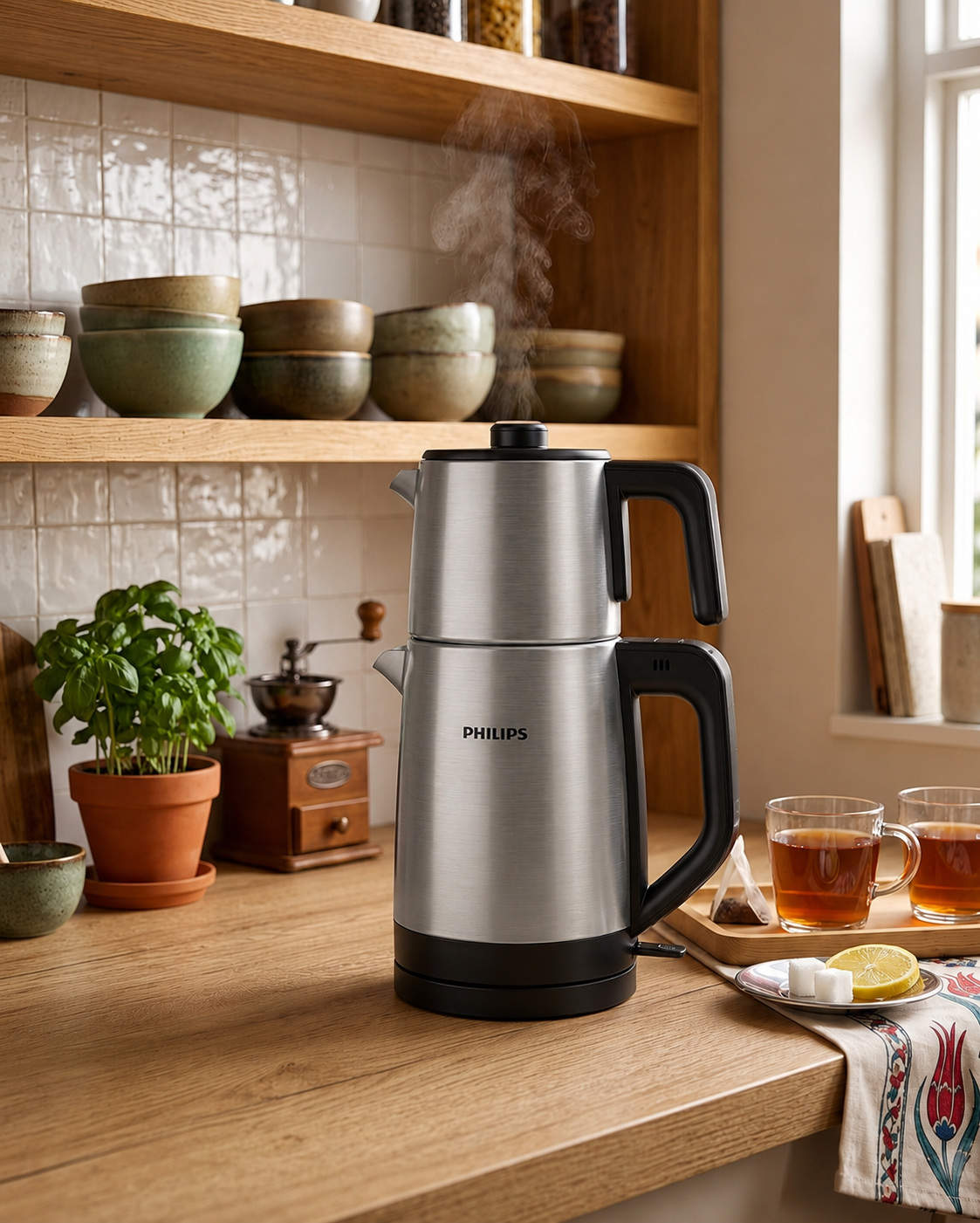
A product from a self-developed economical tea maker series, adopted by Philips and brought to market in under six months.
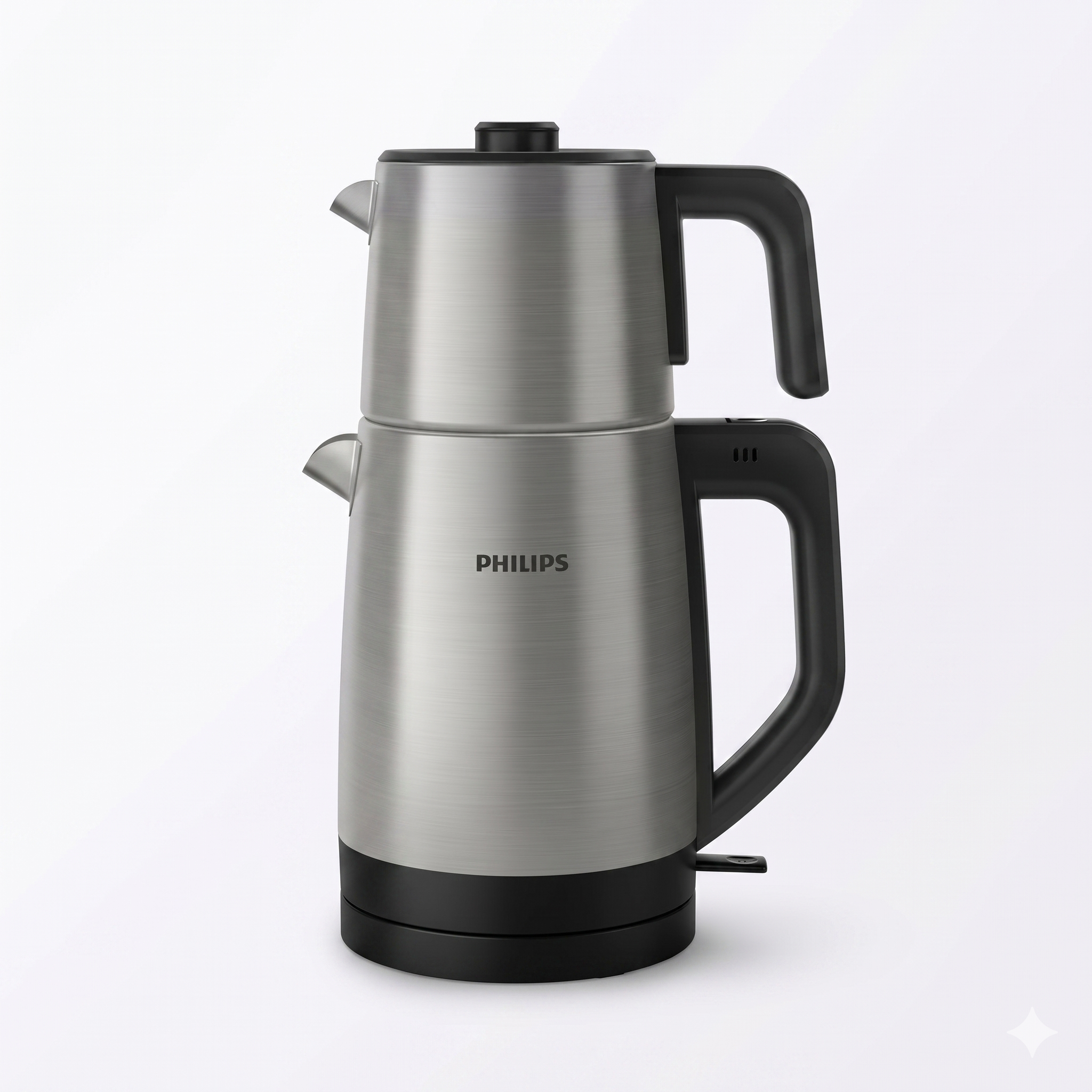
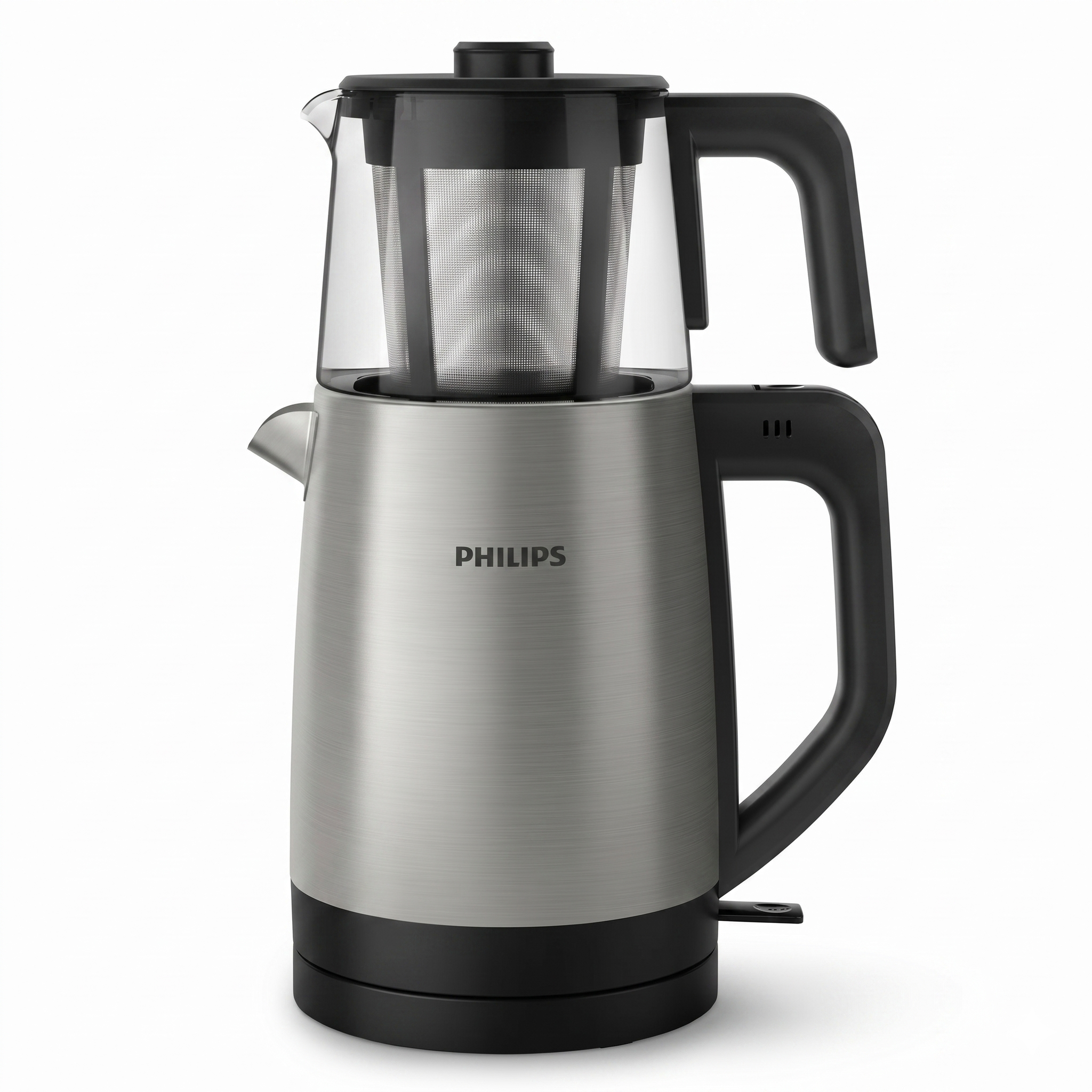
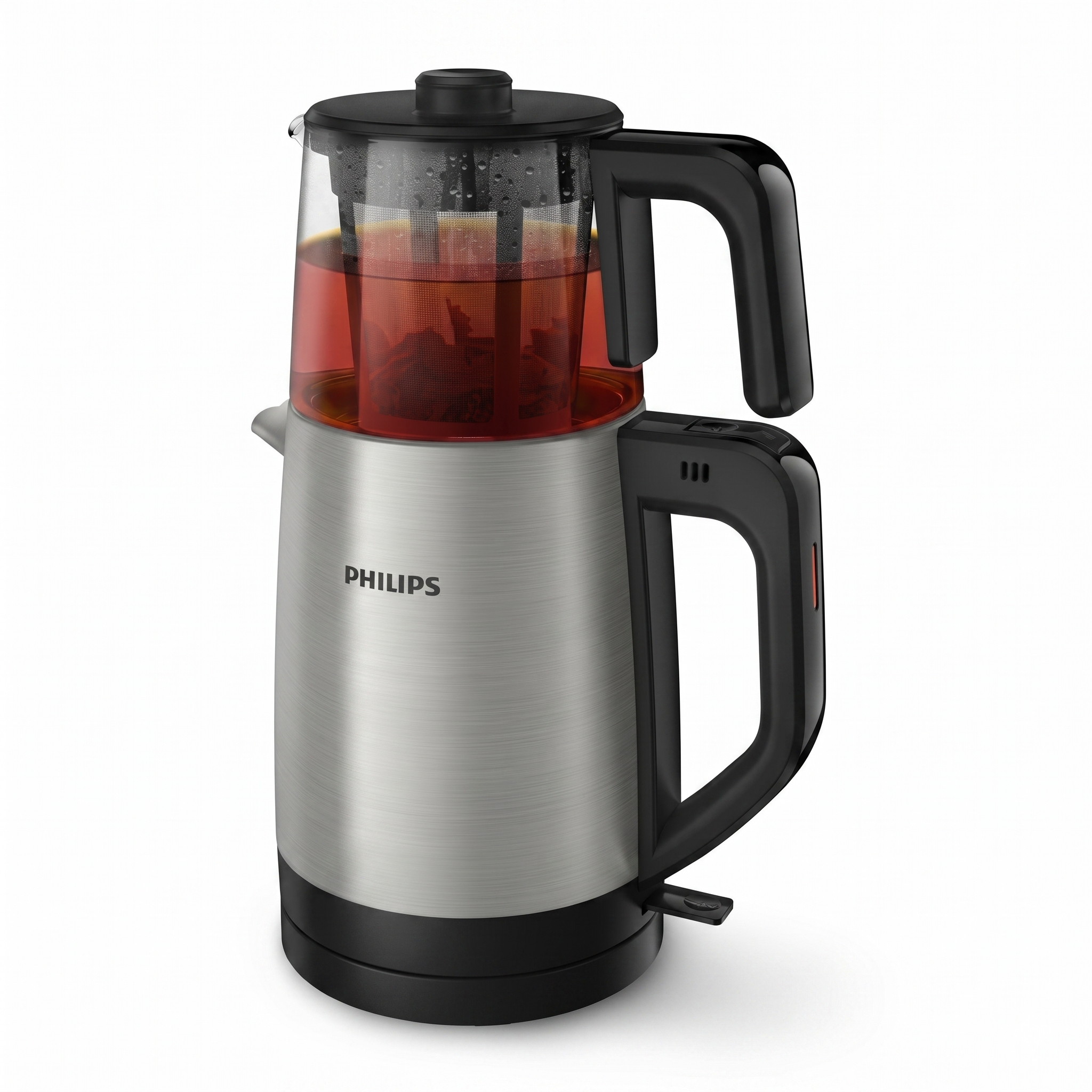
In 2015, I developed a series of economical Turkish tea makers — the classic two-piece format, a stainless steel heating base paired with a glass-and-steel teapot, which was genuinely trending in the market at the time. Philips needed a fast way to fill a gap in their own lineup, and selected one model from that series to adapt under their brand.
The product went through minor revisions to align with Philips's design identity and technical standards, then moved to production in under six months — a speed that's rare in hardware development, made possible by starting from something already proven rather than from zero.
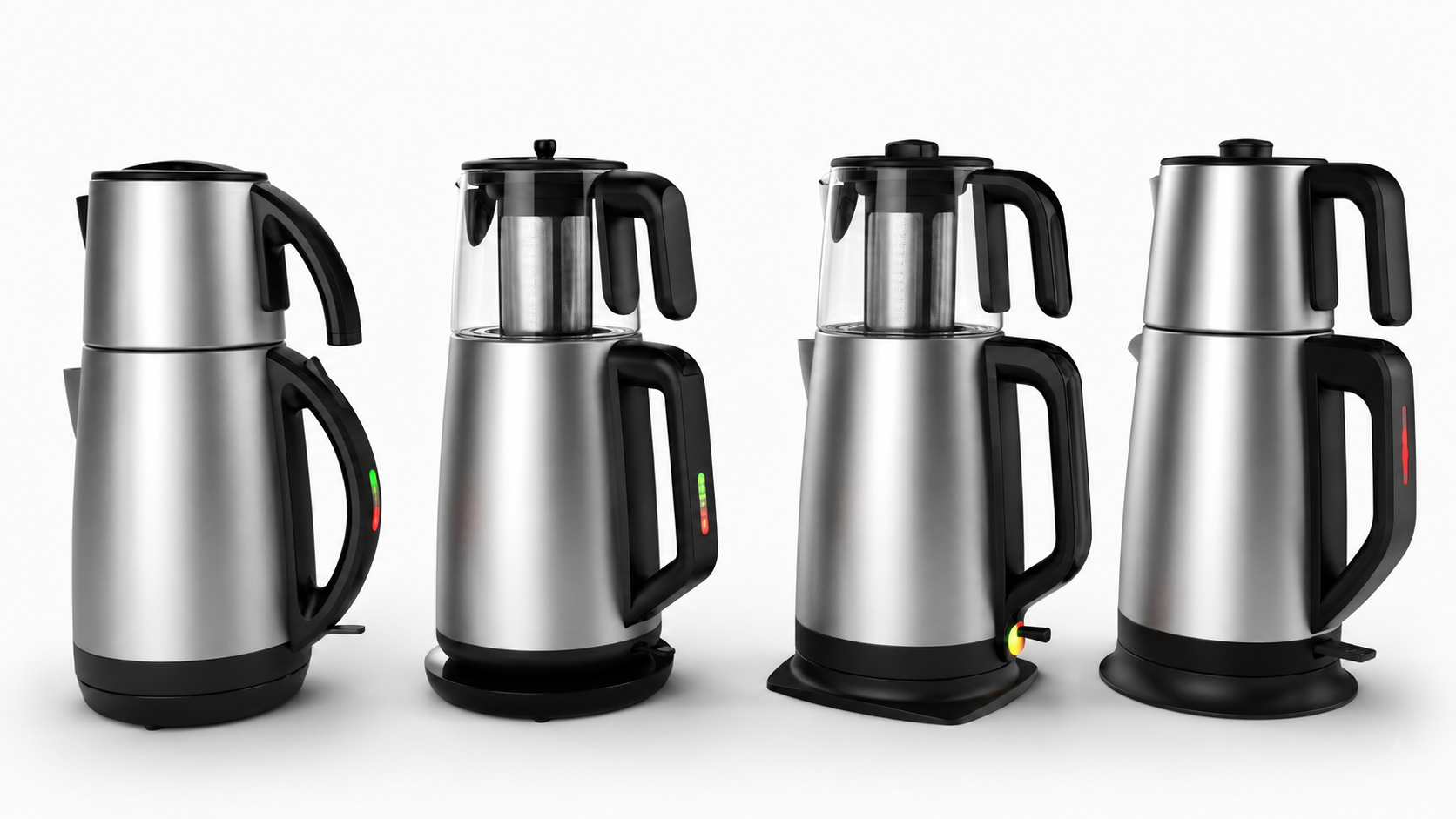
Philips wasn't looking to commission something new — they were looking to move fast on something credible. The series gave them a shortlist of working designs, already resolved at the level of function and form, so the conversation could start at "which one fits us" rather than "what should this even be."
They selected the simplest, most minimal model in the series — a deliberate choice that aligned with Philips's broader product language more than any other option in the lineup.
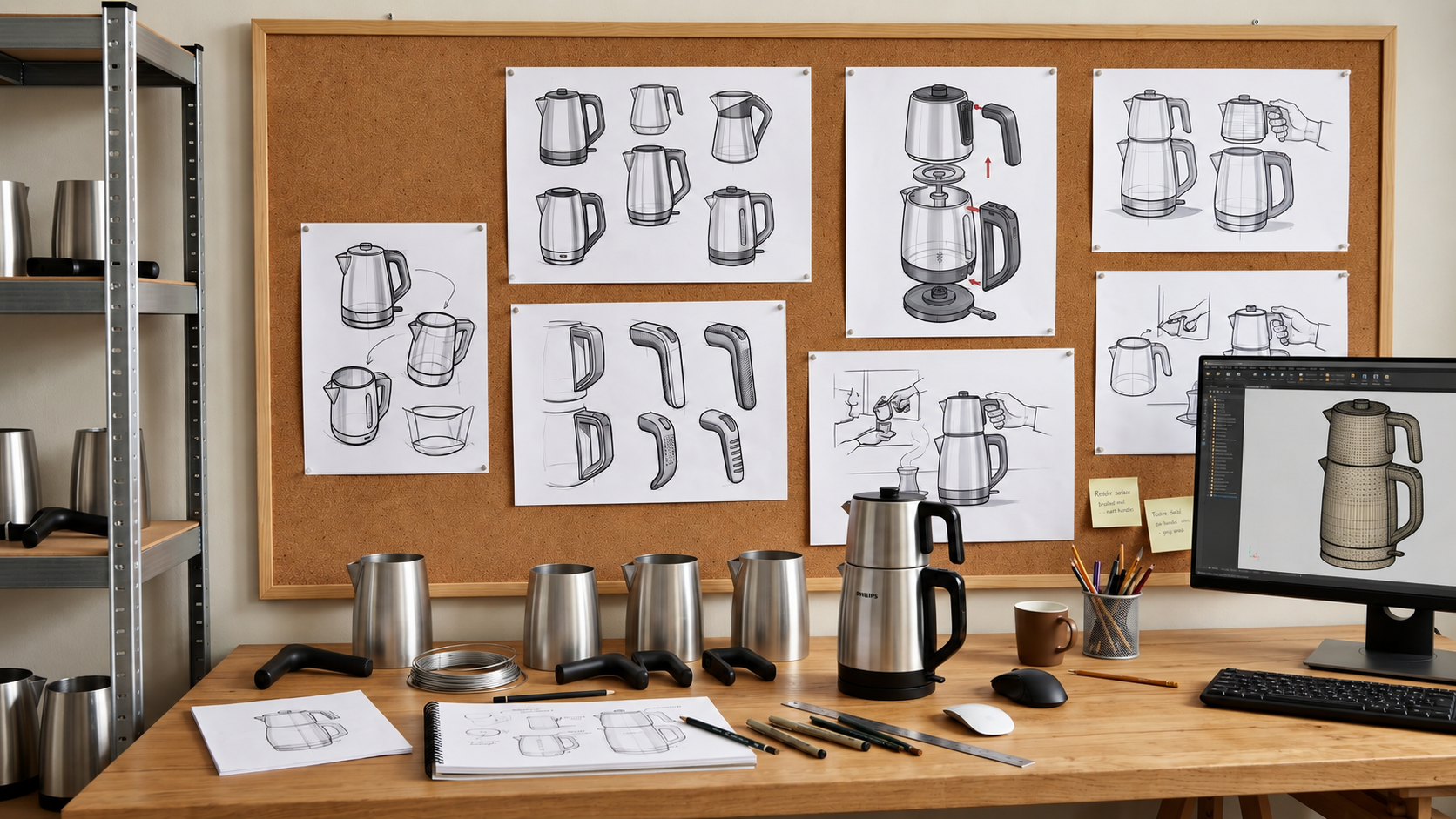
Sometimes the fastest way to market isn't designing something new. It's already having designed it.
Idea
The classic stainless-and-glass tea maker format was having a real moment in the market when this series was developed. The goal was a genuinely economical product that still carried every function a Turkish tea maker needed — nothing missing, nothing excessive.
Form
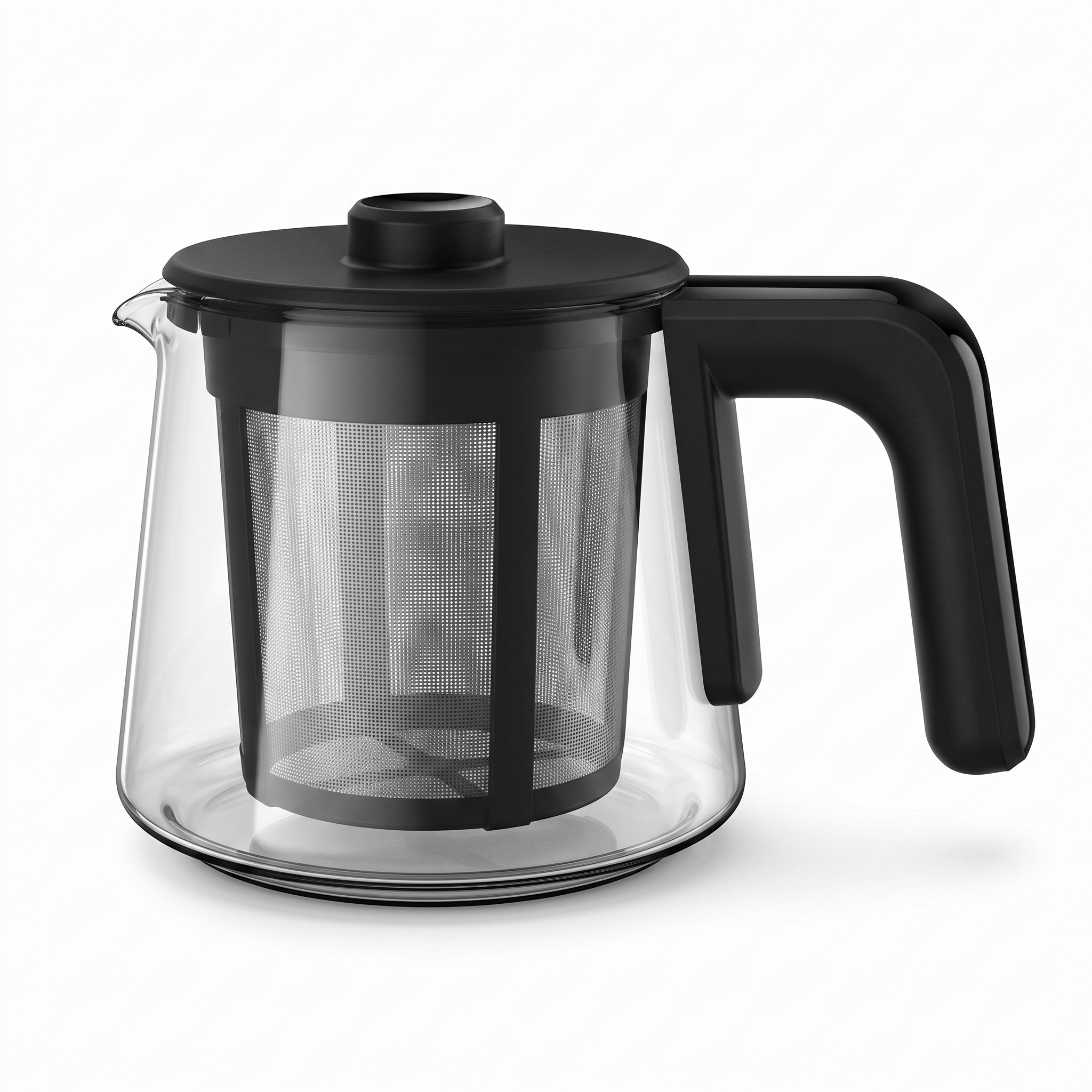
A stainless steel heating body paired with a glass-and-steel teapot — the format the category had settled on as both familiar and credible to the Turkish market. Philips's chosen model was the simplest, most minimal version in the series, the one that read most clearly as a Philips product once adapted.
Function
Every function a Turkish tea maker requires was already built into the base design — nothing needed to be engineered from scratch for Philips to make it their own. The adaptation work was about identity, not capability.
Differentiation
Most brand adaptations require months of back-and-forth to align a foreign concept with a company's internal standards. This one didn't, because the communication between both sides was unusually direct — each side understood the other's constraints well enough to avoid the friction that normally slows this kind of project down.
That alignment is what made a sub-six-month turnaround possible, from selection to market-ready product.
Impact
Philips filled a real gap in their lineup with a product that didn't need to be invented, only adapted. Launched in 2017, it has stayed in local production and continues to sell years after release.


The work here wasn't about solving a hard design problem — it was about translating an existing design into Philips's language without losing what made it work in the first place. That requires a different kind of discipline: understanding exactly which changes matter to a brand's identity and which don't, rather than redesigning for the sake of being seen to redesign.
What made this project succeed was communication on both sides. Philips understood the limitations of adapting an existing platform, and I understood theirs well enough that the revisions stayed minor by design, not by luck.
From series concept to Philips-branded product on shelves in under six months. Launched in 2017, still in local production and still selling — proof that a well-built platform can move faster to market than a project that starts from a blank page.