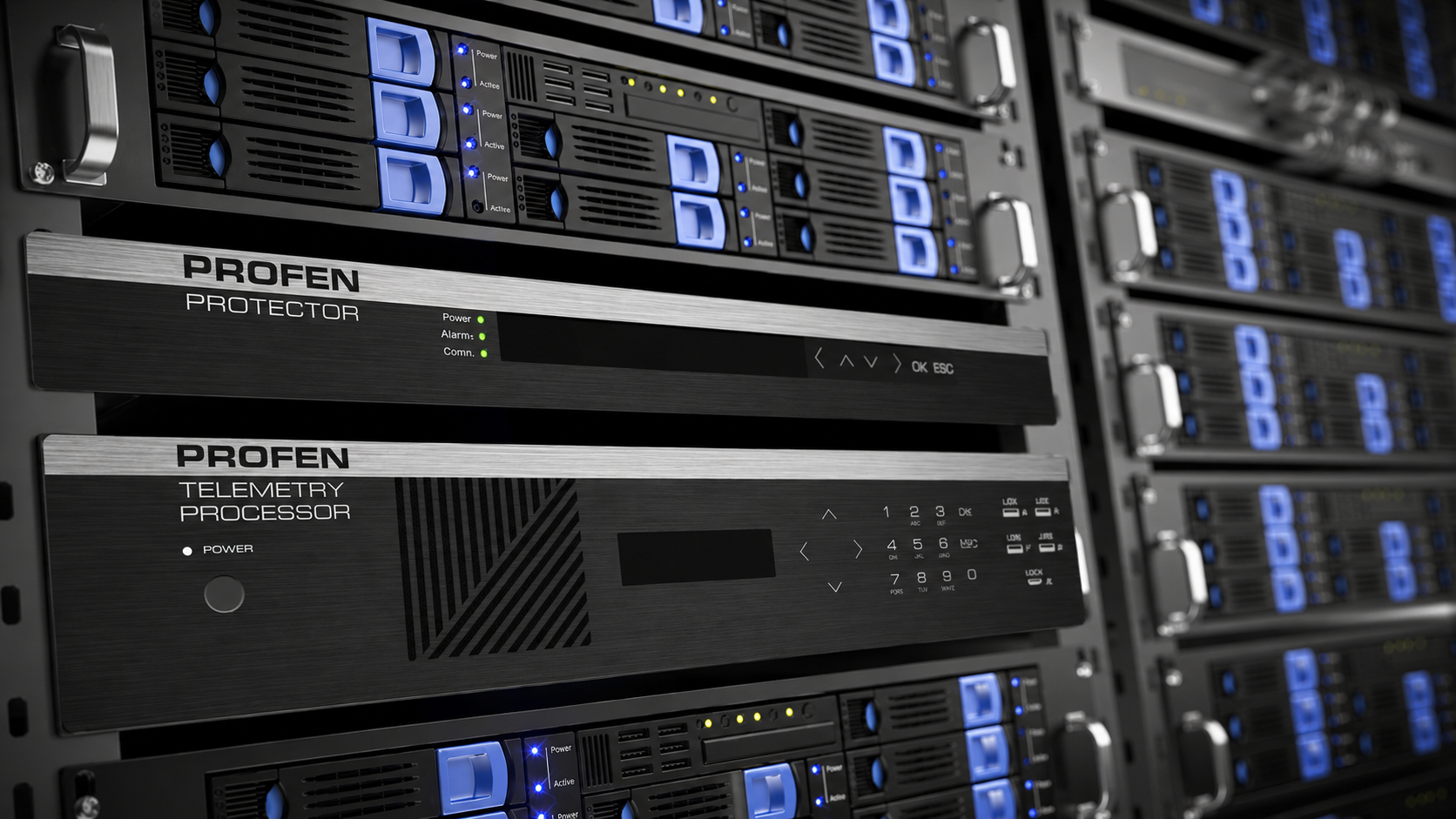
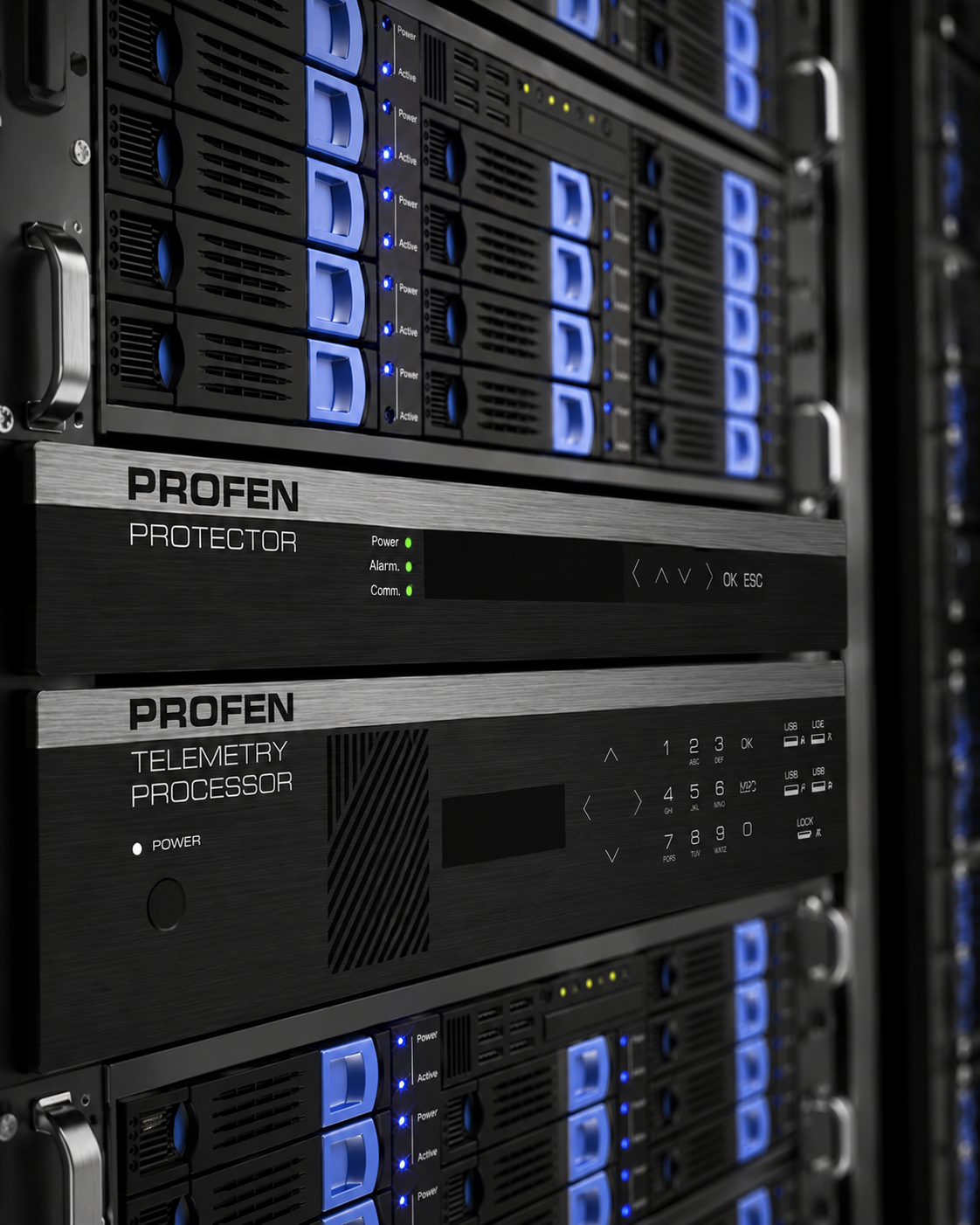
Next-Generation Interface Architecture for an Industry Untouched by Design
Profen's products are deeply technical — switching systems, signal analyzers, ground station hardware. But Profen wanted something the category had never asked for: an interface that felt modern and genuinely usable, distinct from every competitor's front panel.
They asked for a design language applicable across their entire product range, not a one-off skin for a single device. Two of their hardware products became the reference points where that language was first built and tested.
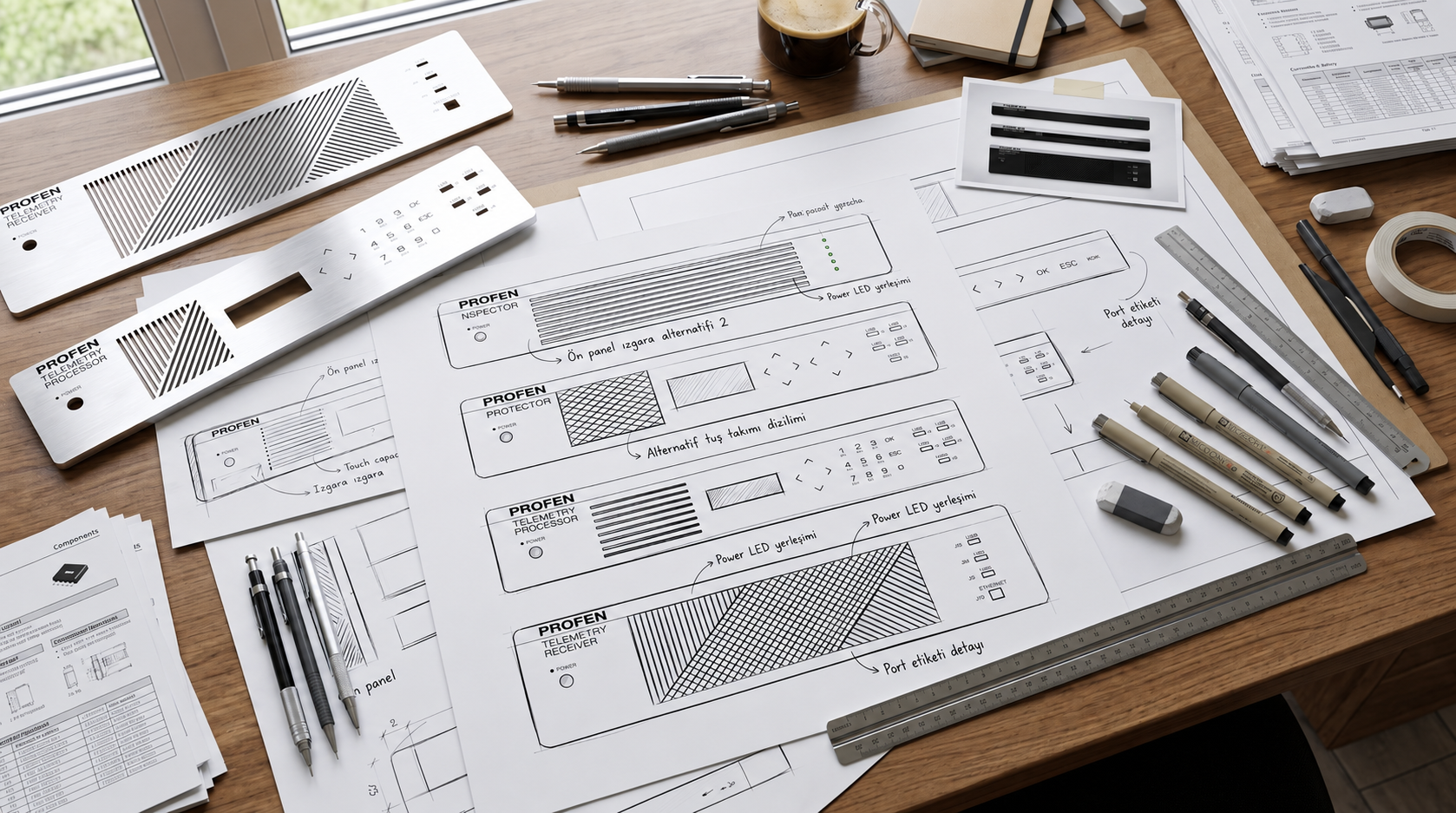
This industry doesn't typically work with designers. Front panels are engineered by engineers, built entirely around function, and problems get patched with short-term fixes rather than rethought from the interface down. I came in to put the user at the center of decisions that had always been made from the inside out.
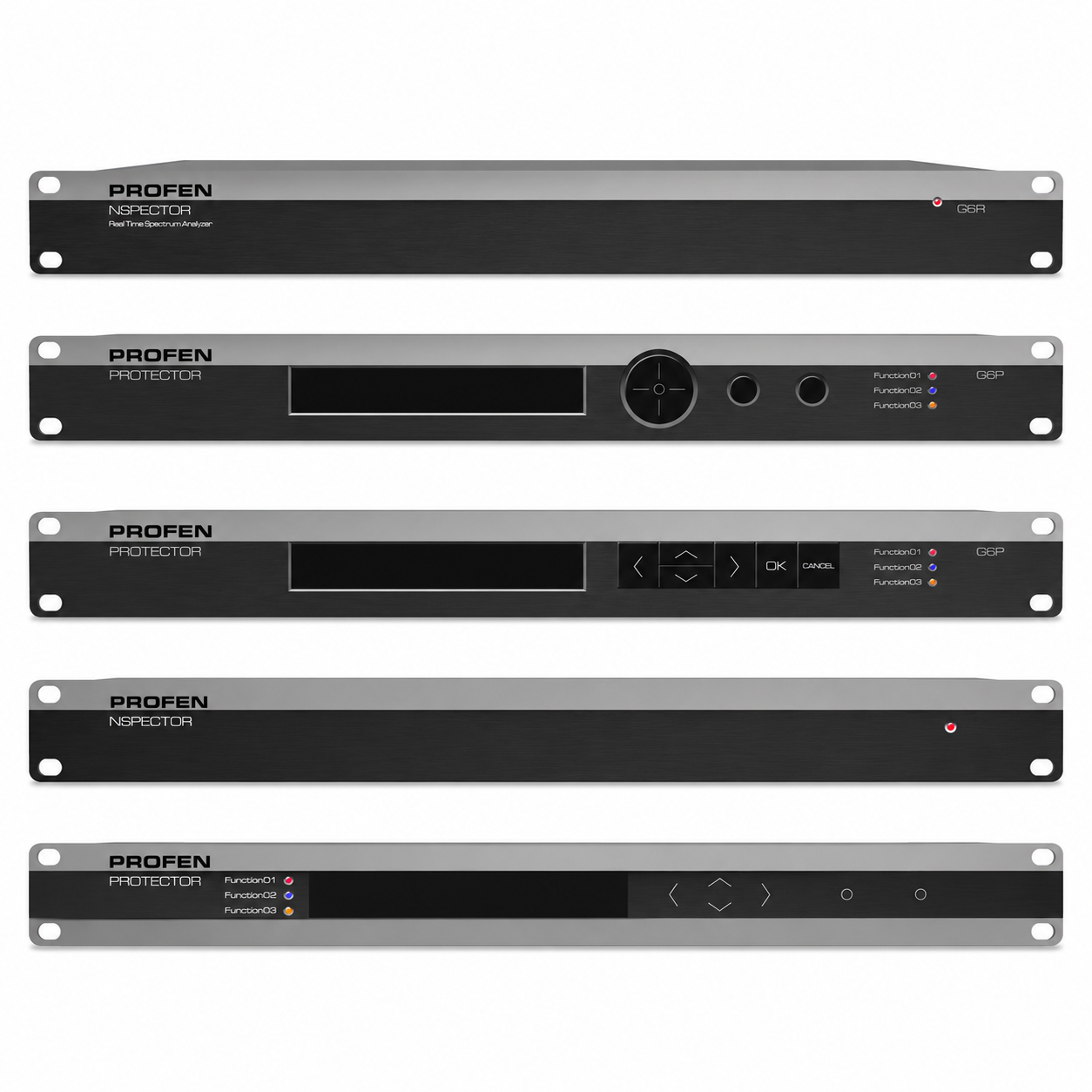
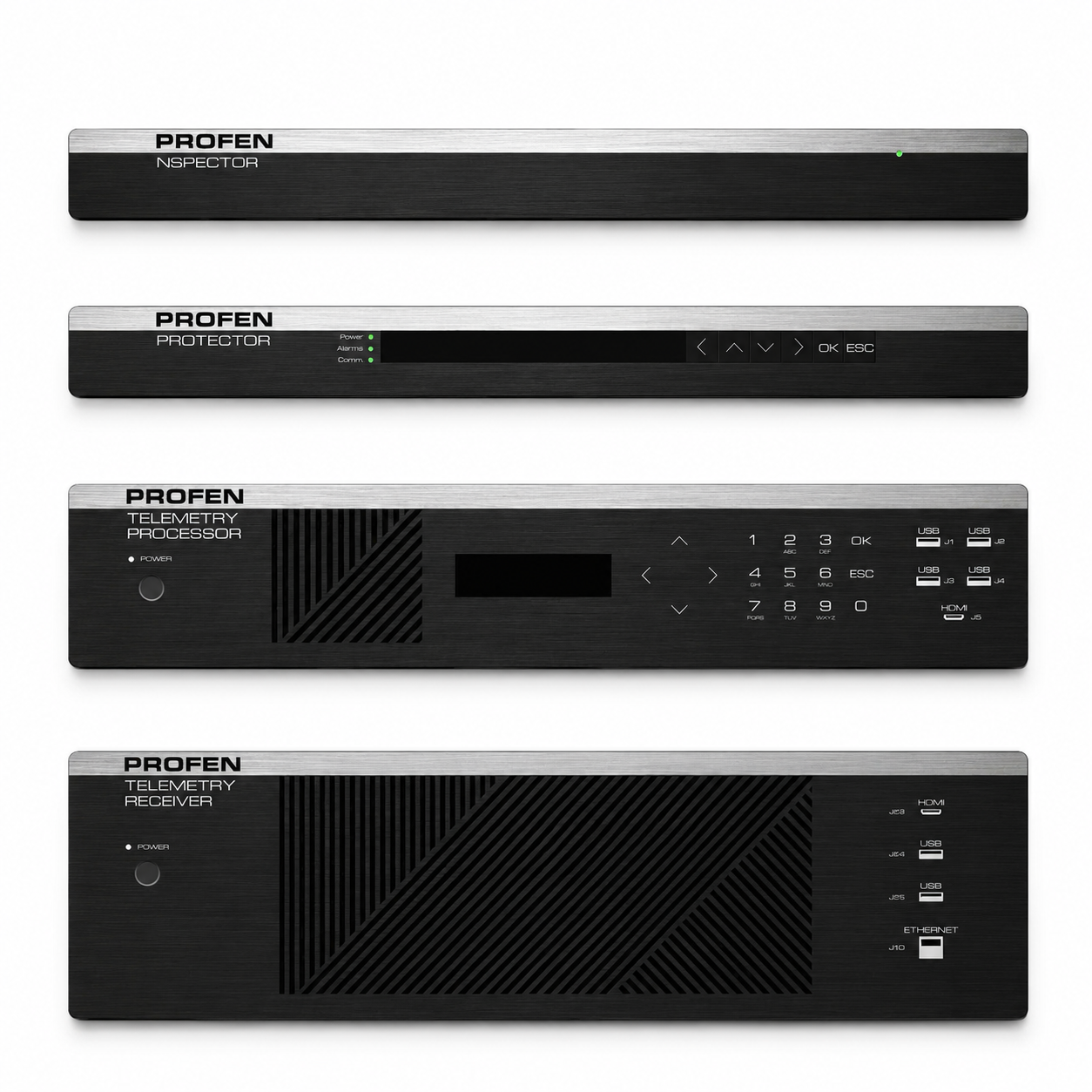
Screen placement, physical button positioning, what each button actually does, the icon system, the menu structure — all of it was designed together, not as separate disciplines handed off between teams.
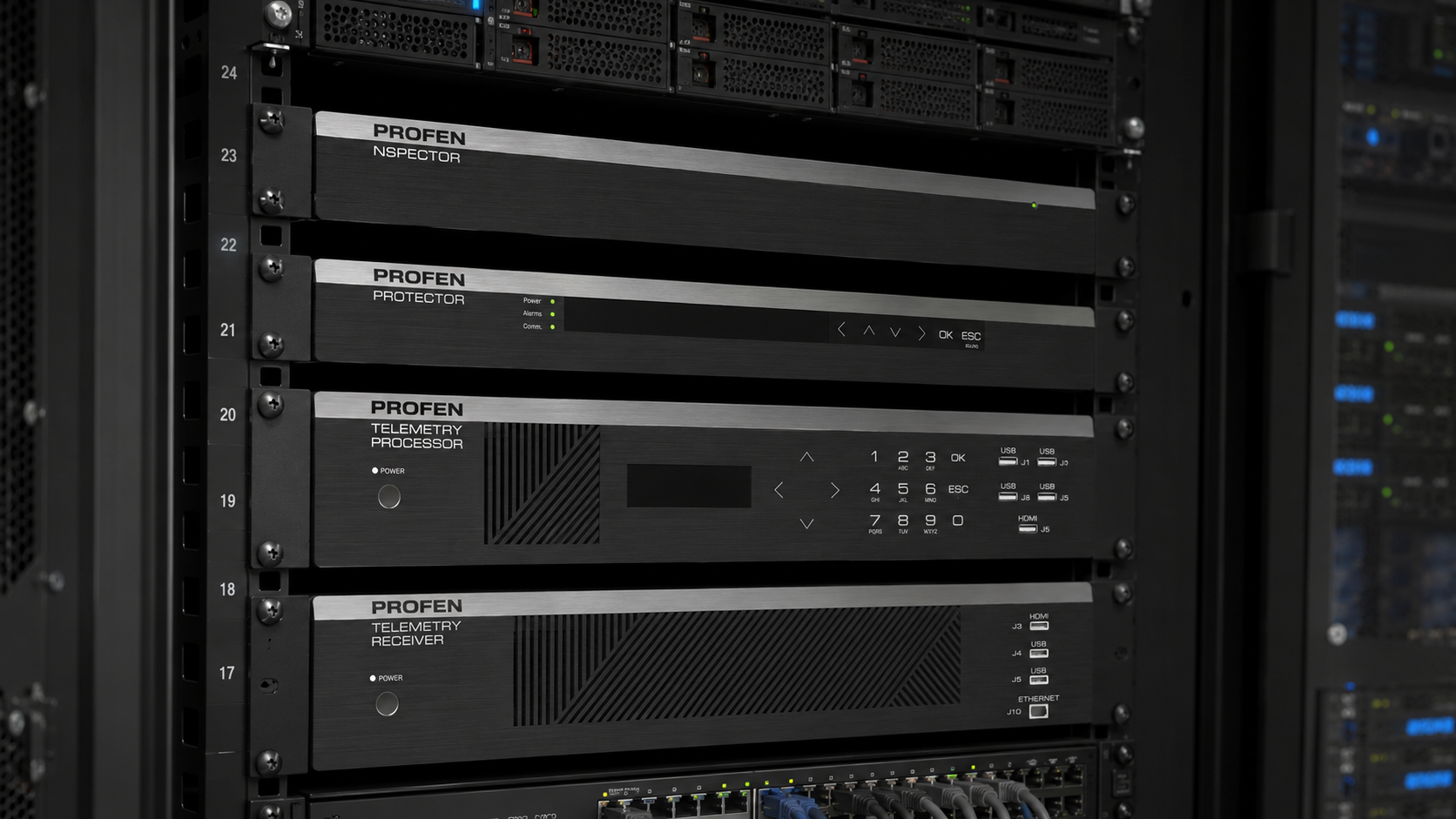
Proving That a Purely Utility-Driven Industry Can Gain True Functionality Through Design
Idea
RF and satellite hardware interfaces are almost universally engineer-built and function-only — screens, keypads, and status lights that work, but were never designed around how a person actually reads or navigates them. The idea was to bring user-centered thinking into a category that had never required it.
Form
Having a technical background made this work move faster than it normally would. I understood both sides — the engineering constraints and the design opportunity — well enough to suggest changes that improved usability without creating new technical problems for Profen's engineers to solve.
Screen position, button layout, and the visual hierarchy of status indicators were restructured around how an operator actually scans a device under pressure, not around how the internal layout happened to fall.
Function
The icon system and menu structure were designed together, not separately — every icon had to be legible at a glance, and every menu level had to get an operator to a critical alarm or setting in the fewest steps possible.
None of this required reinventing the hardware. Minor shifts in perspective — what to show first, how to group related settings, where the eye should land — produced results the engineering team could implement without disrupting what already worked.
Differentiation
In a category where every competitor's front panel looks like it was designed by the same uncredited engineer, a genuinely considered interface stands out immediately — not through decoration, but through how much faster and calmer it feels to operate under real working conditions.
This wasn't about making technical hardware look prettier. It was about proving that a category built entirely on function could gain real function from design — not lose it.
Impact
The language developed on these reference products became the template for Profen's broader product range — a reusable design system the engineering team could apply going forward, rather than a one-time fix for two devices.
For a company in a category that had never worked with a designer before, that's the real outcome: design became a repeatable part of their process, not an exception.
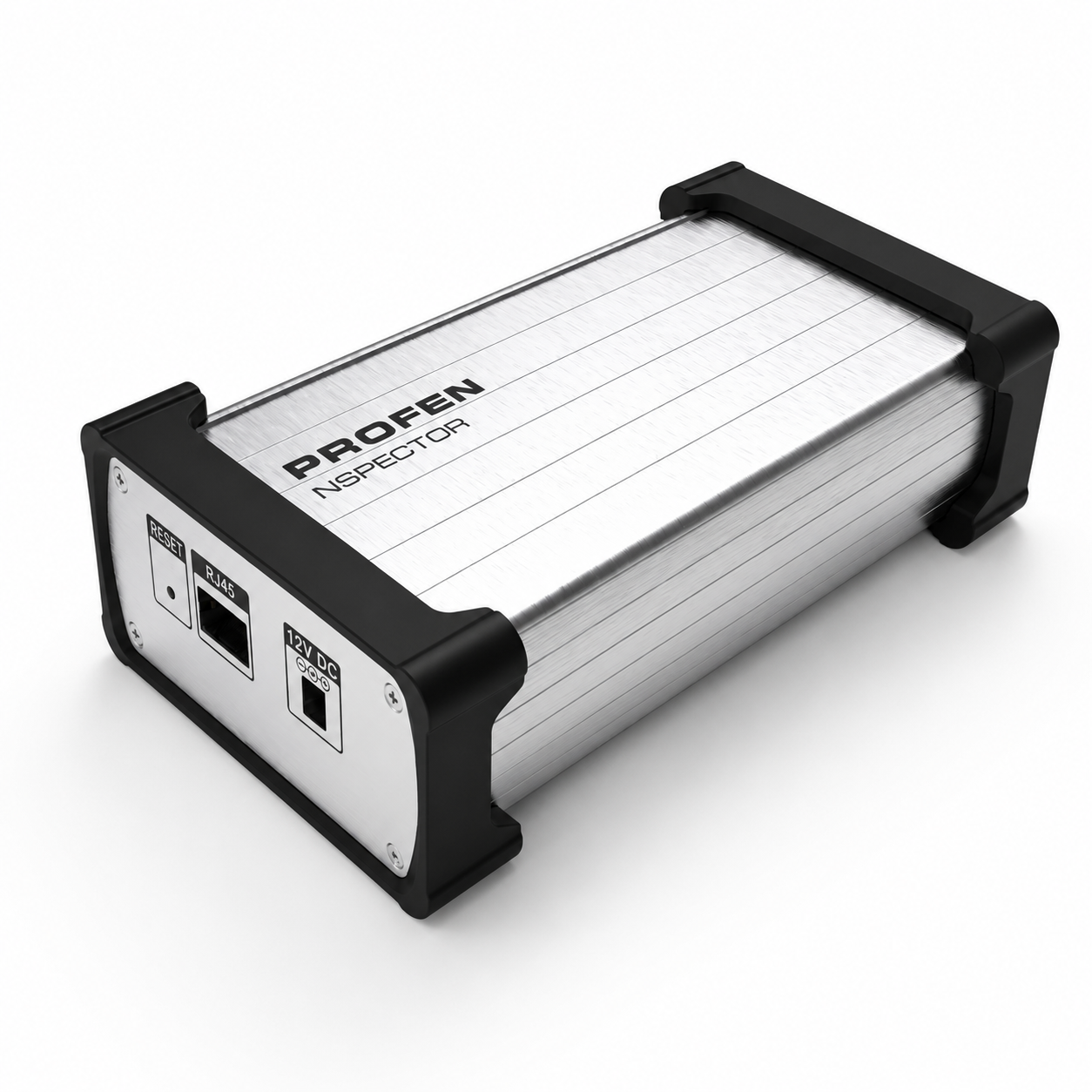
Working in a category where engineers design everything could have meant constant friction — pushing for user-centered changes against people trained to optimize for function alone. It wasn't, because of where I started: with a technical background, I could speak both languages fluently enough that proposed changes never read as a designer's wishlist disconnected from engineering reality.
What I'm proud of here isn't a dramatic redesign — it's the opposite. Small, deliberate shifts in perspective, applied with enough technical credibility that Profen's own engineers adopted the thinking rather than resisting it. That's a harder problem to solve in this industry than it sounds, and a more durable one than any single interface.
Profen now has a design language that distinguishes its hardware visually and functionally from every competitor in the category — built on two reference products and ready to extend across the rest of their range.