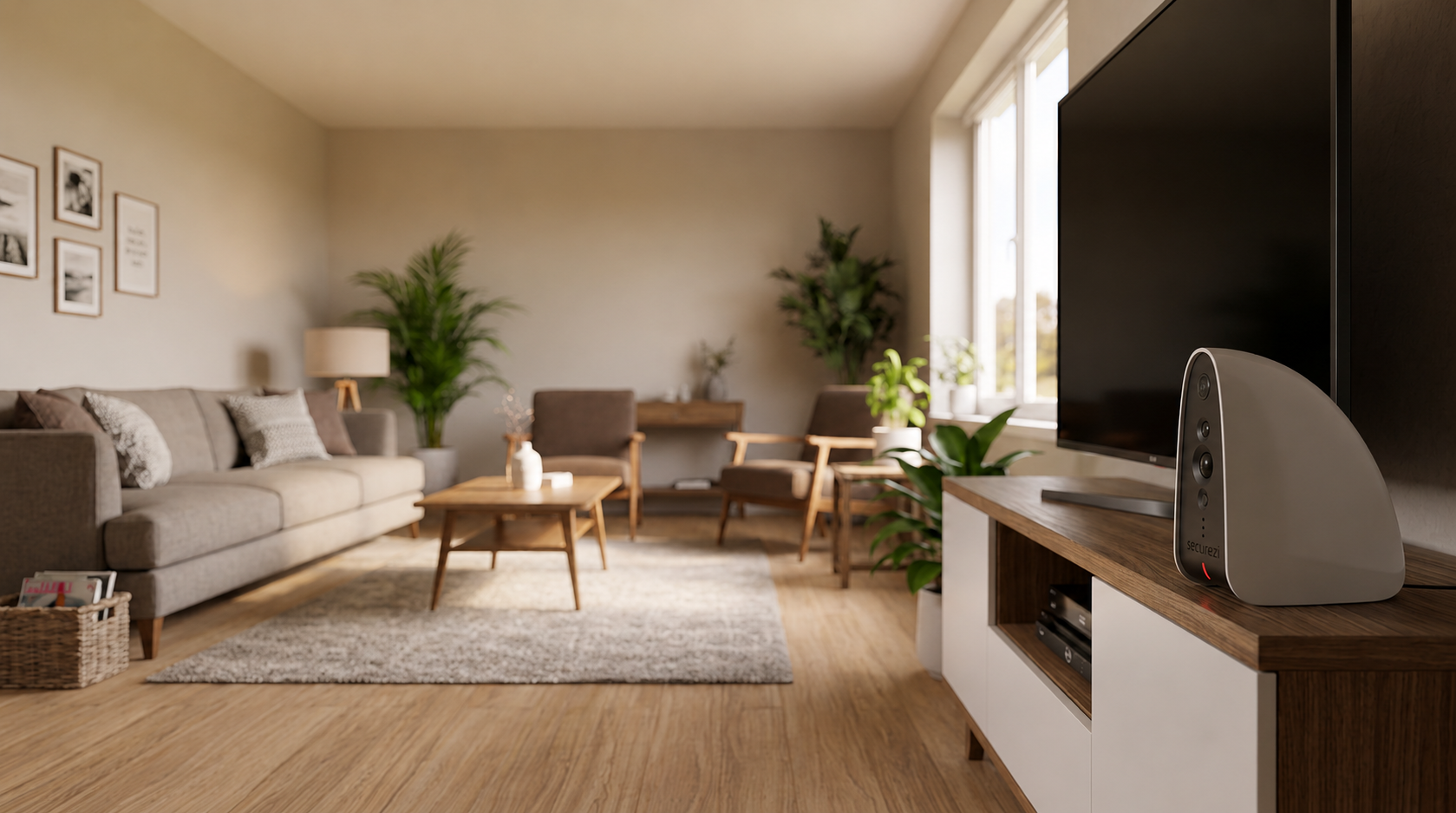
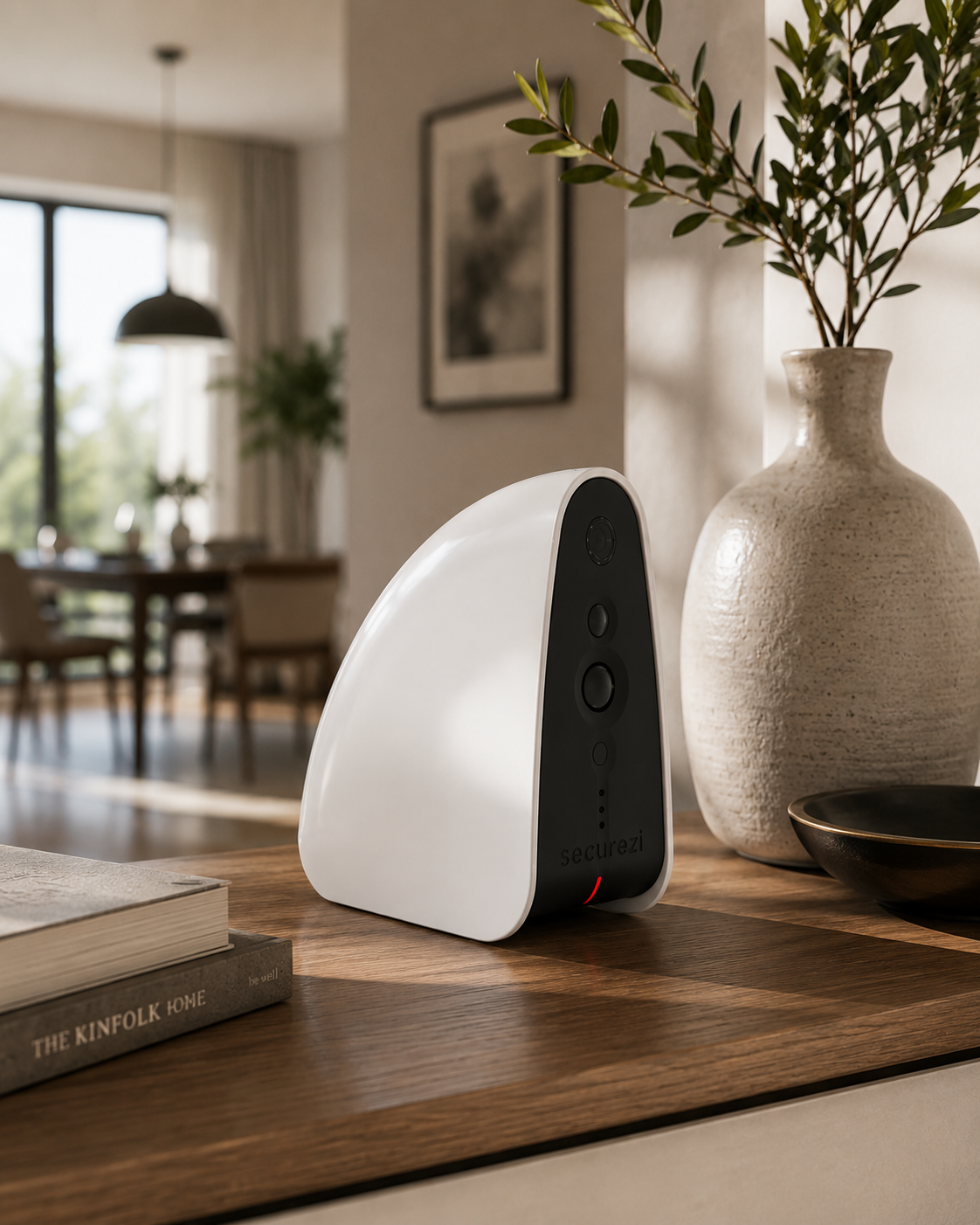
A security system designed not to look like one — ahead of its time in a market not yet ready for it.
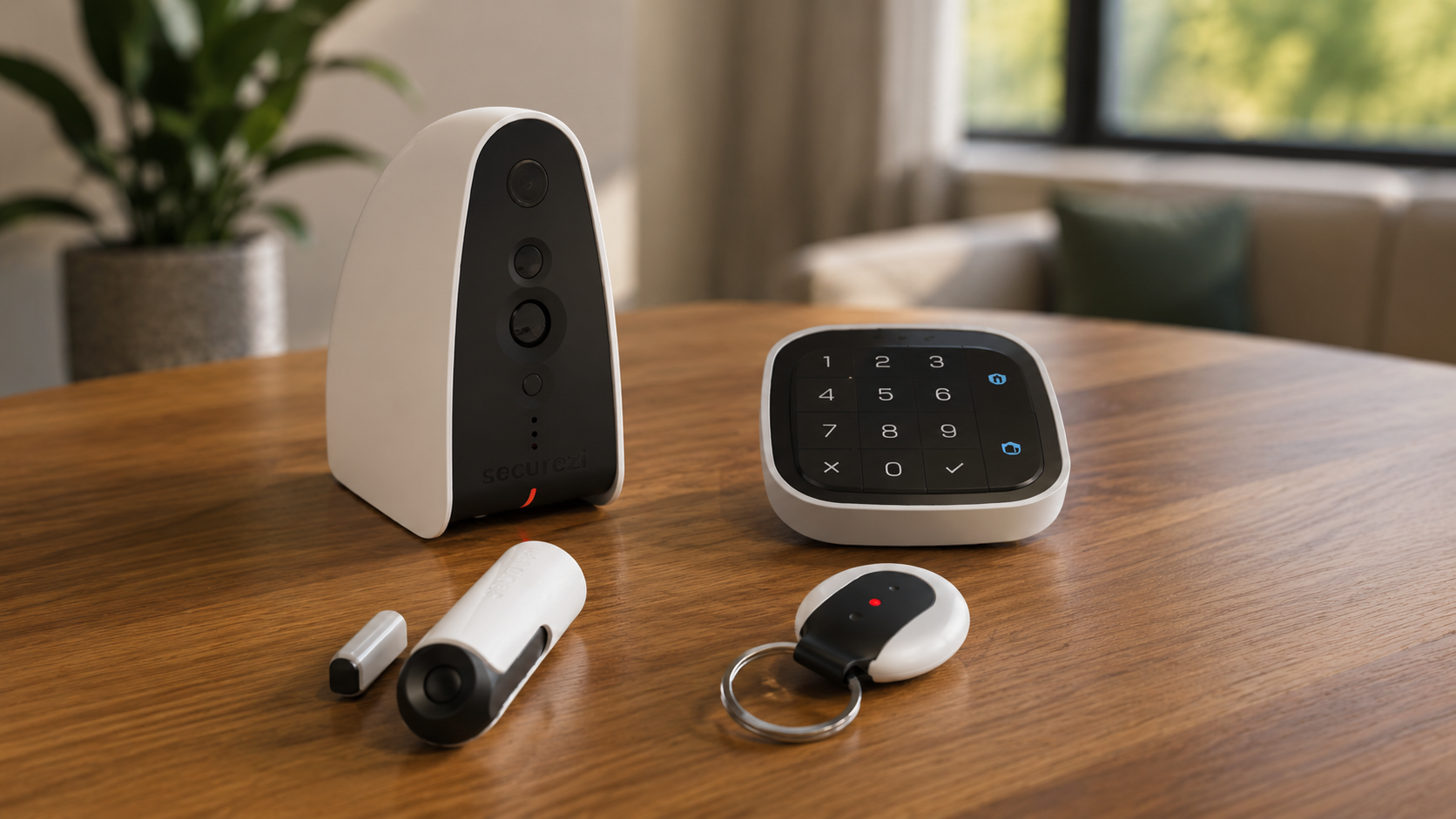
Securezi set out to make home security accessible in a country where less than 2% of households used any kind of security system. I led the design of every product in the line — the camera-equipped smart hub, door and window sensors, the warning siren, and the mobile app — and held the creative direction for the brand as a whole.
The technology itself was genuinely advanced: HomeKit certification, dual Wi-Fi and 4G connectivity with battery backup, and a sensor architecture built to do more than the category typically asked of it.
The design brief was a contradiction most security products never resolve: build something genuinely advanced, but make sure it never announces itself as security hardware. A camera hub sitting on a shelf needed to read as a home object first, a security device second.
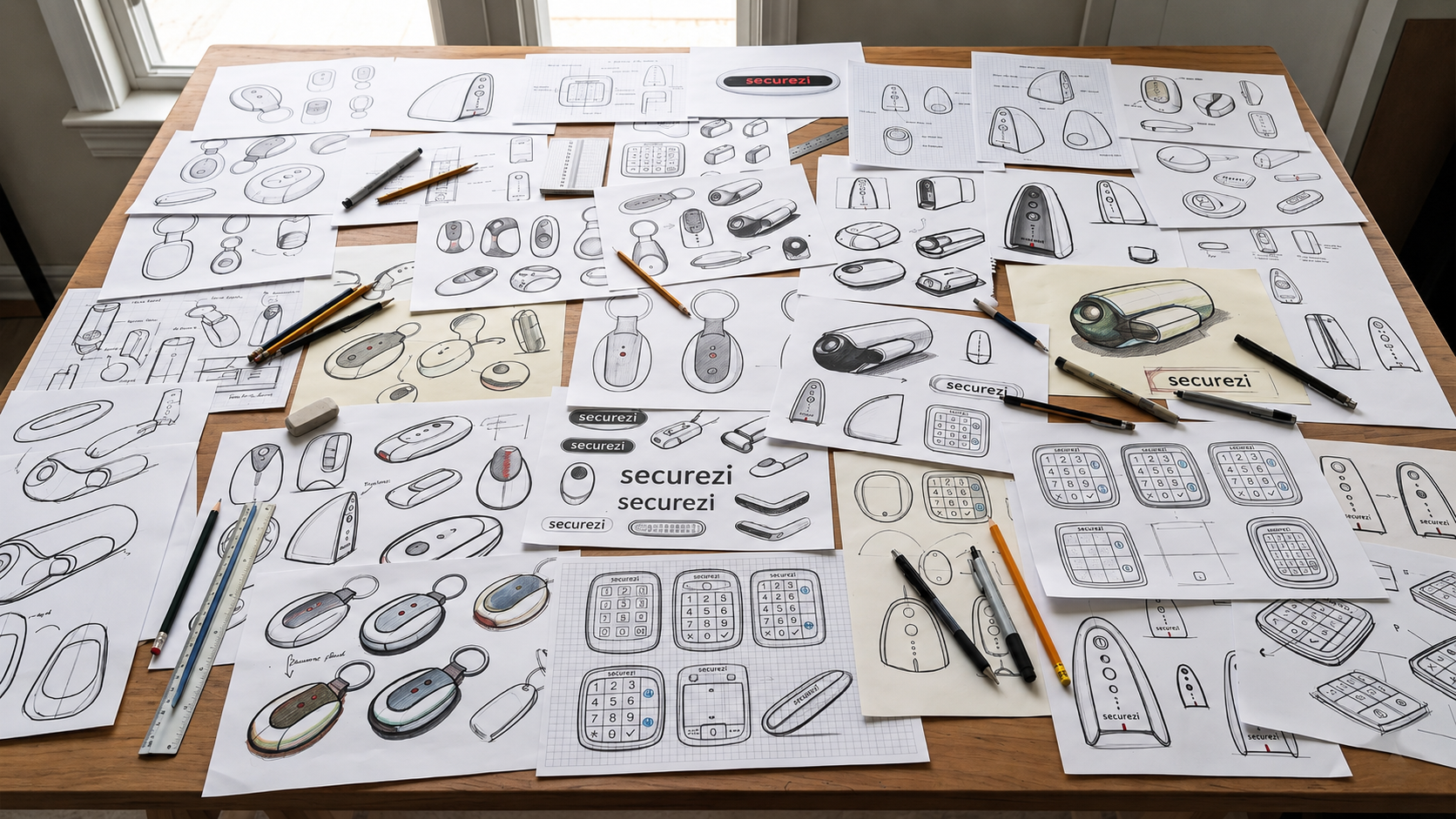
Every decision was filtered through that lens — form, materials, even how the system was controlled — with the goal of removing the visual and behavioral friction that usually comes with home security.
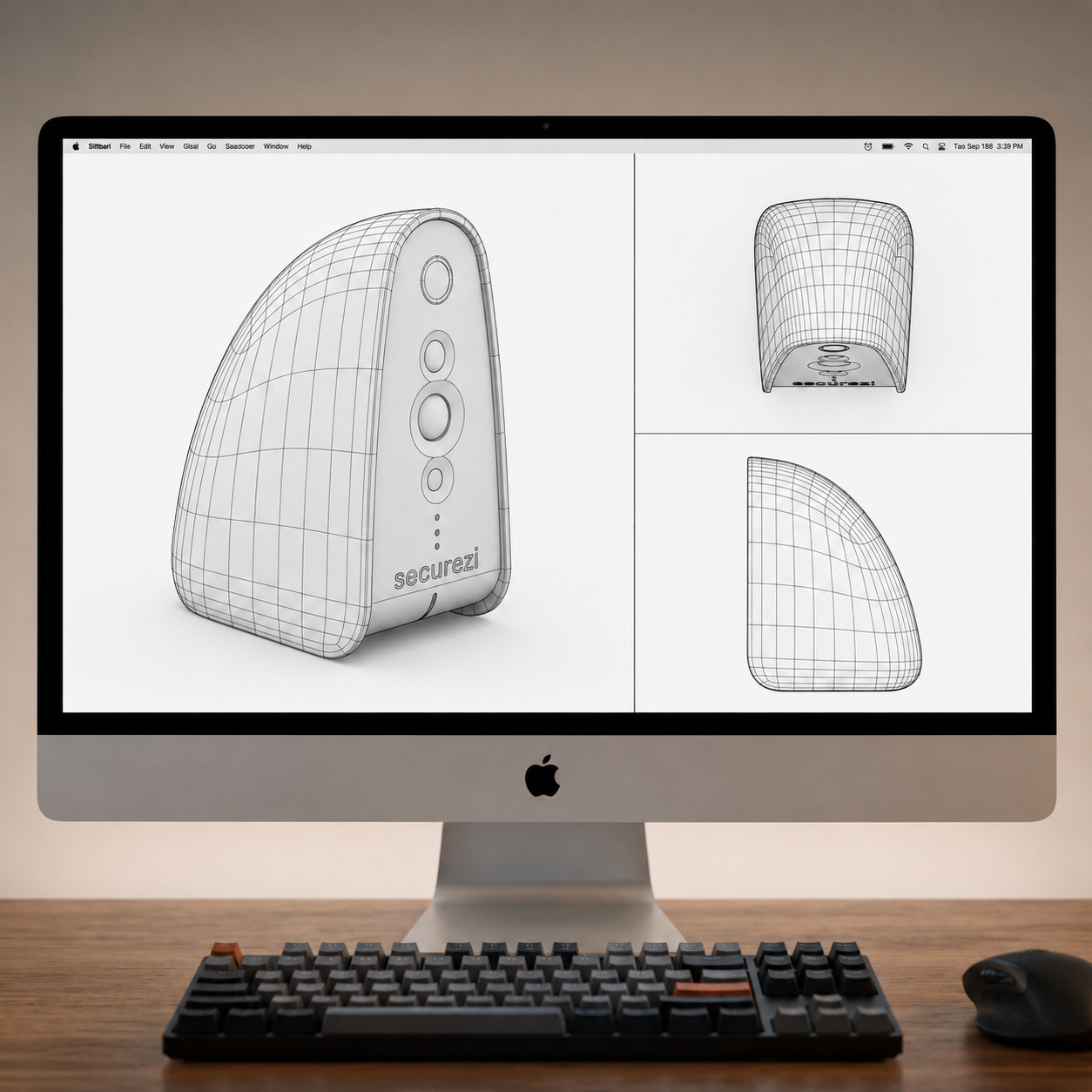
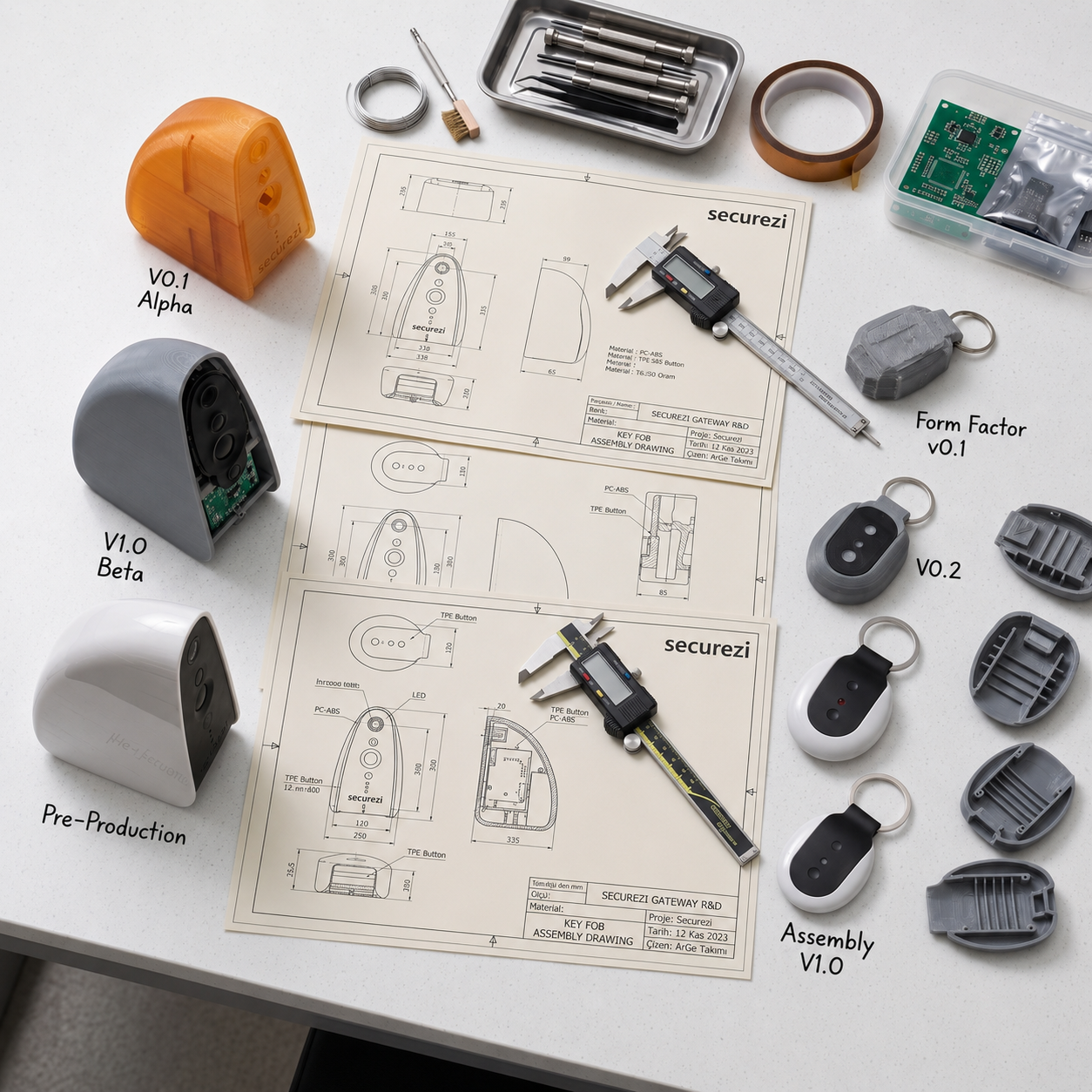
The best security system is the one that never looks like it's watching.
Idea
Most home security hardware looks like what it is — visible cameras, utilitarian sensors, equipment that reminds you why it's there. The idea behind Securezi was to remove that reminder entirely, while keeping the technology underneath genuinely capable.
Form
Every unit was designed to disappear into a home's existing decor rather than stand apart from it — clean surfaces, quiet proportions, nothing that read as institutional or alarmist. The result was confident enough as an object that it earned a placement agreement with the MoMA Store, a rare validation for a security hardware line.
Function
The door and window sensors went beyond simple contact detection to include motion sensing, giving each unit multiple functions rather than a single fixed job. Control of the entire system was built around a keyfob — a first in the category — so that older users uncomfortable with smartphone-based systems could operate everything as easily as locking a car.
Differentiation
Securezi became the first Turkish technology company to receive an Apple HomeKit license, putting it in an ecosystem most local competitors couldn't access. The keyfob-based control model had no precedent in the category — most competitors assumed a smartphone app was the only interface that mattered.
That assumption is exactly what Securezi challenged, designing for accessibility across age groups the rest of the category had quietly written off.
Impact
The design's quality was validated beyond the local market — a placement agreement with the MoMA Store is not a credential most hardware startups, anywhere, ever reach. Backed by Türkiye İş Bankası's Workup accelerator and TÜBİTAK R&D support, the company also spent time in Silicon Valley and New York through İTÜ ARI Teknokent's Innogate program.
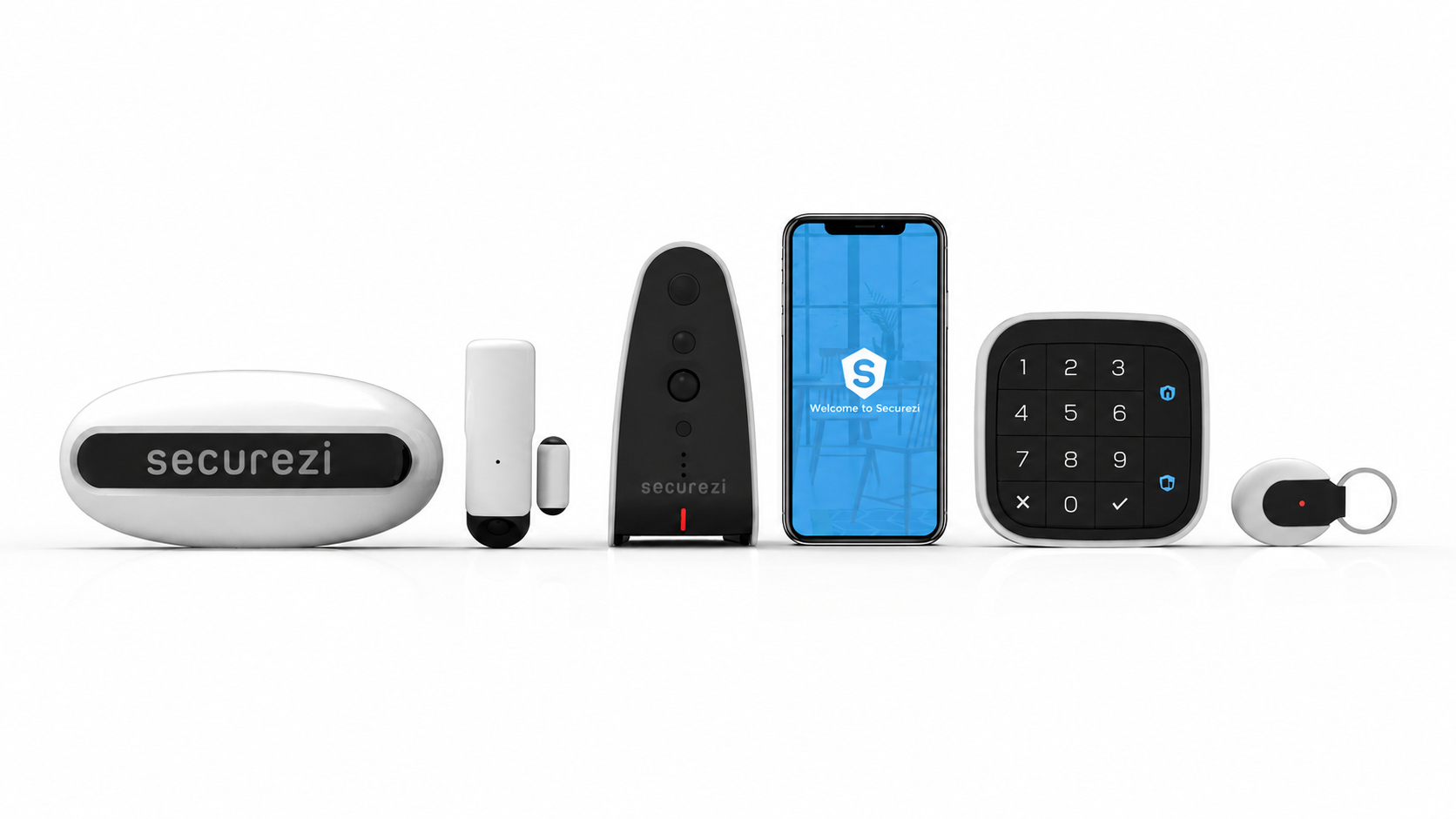
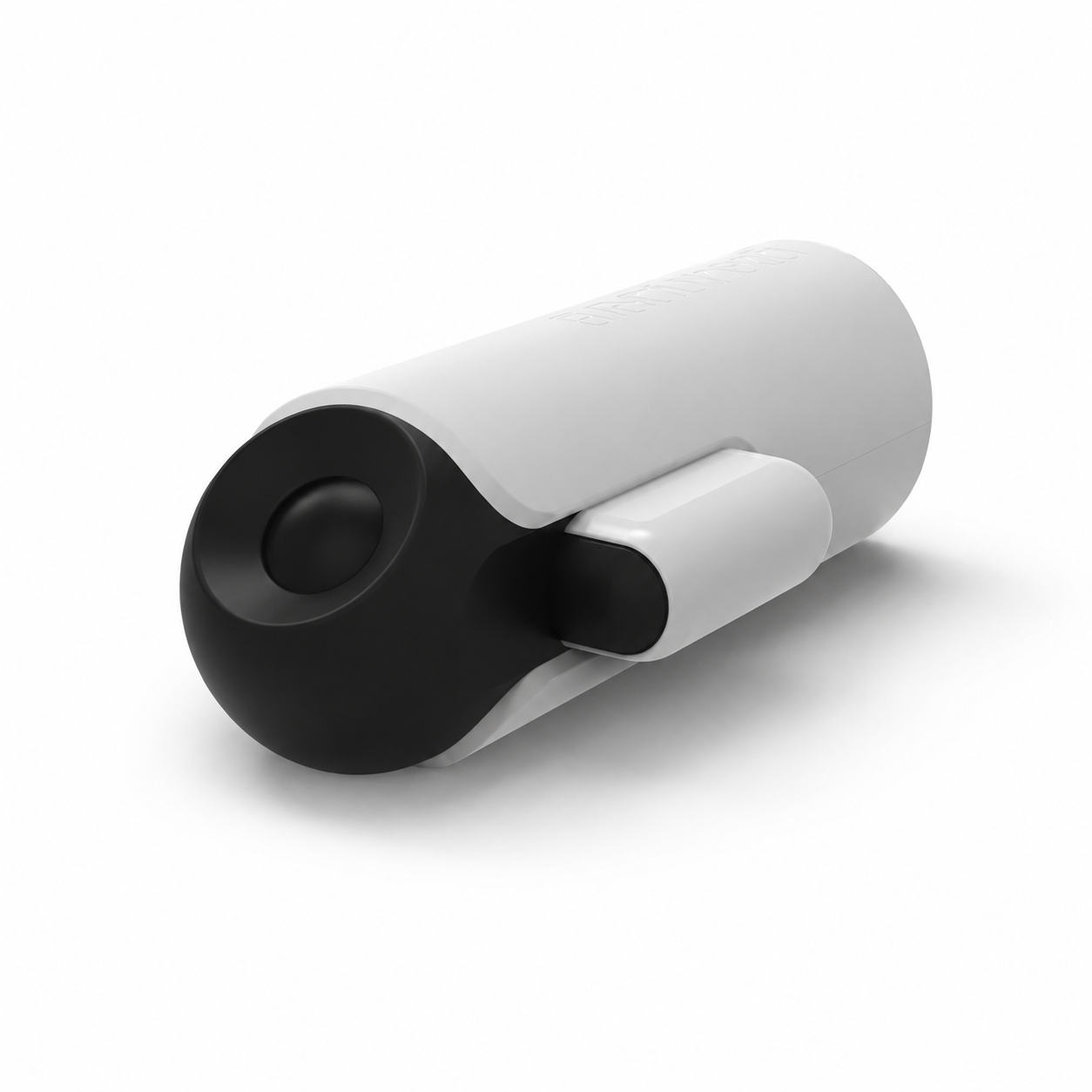
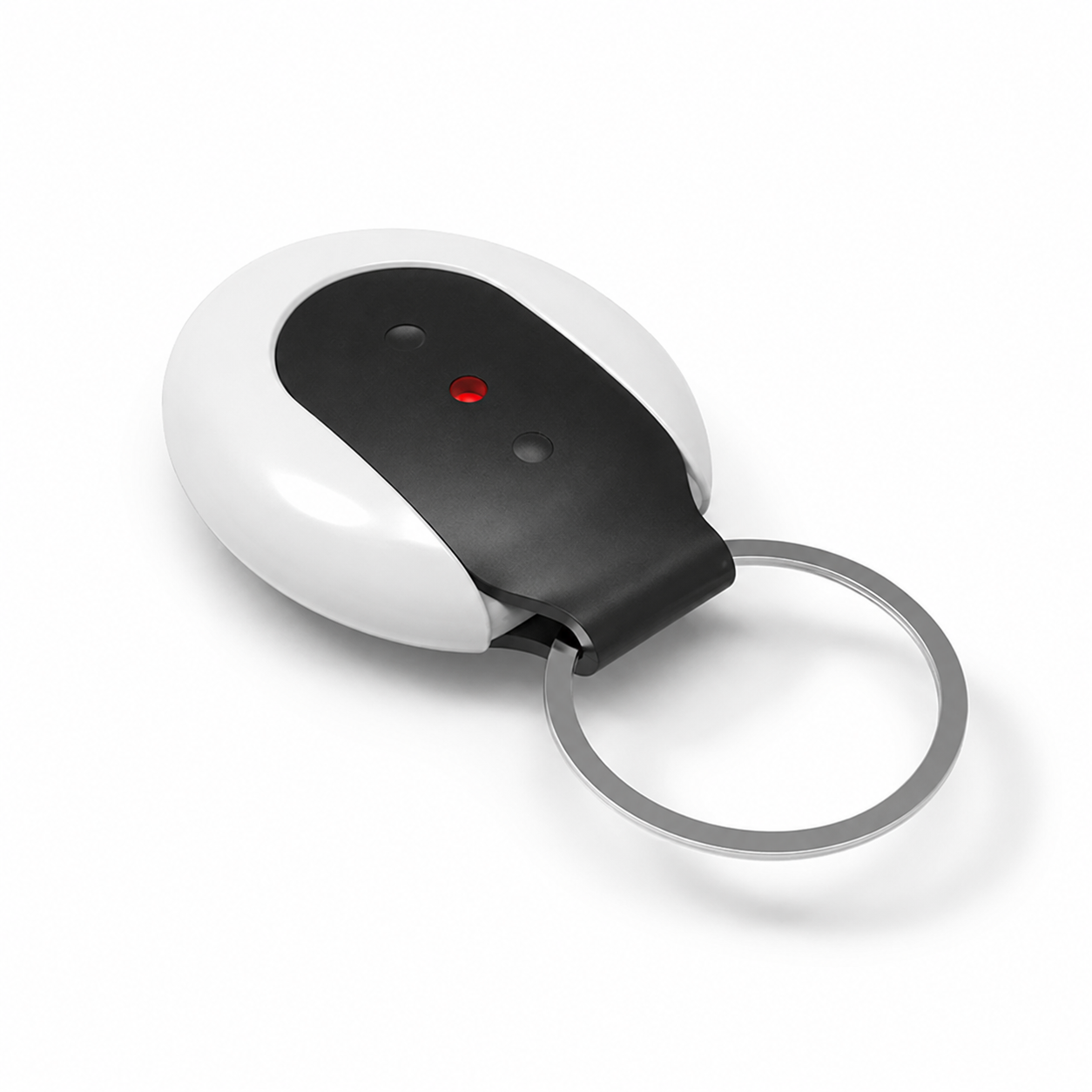
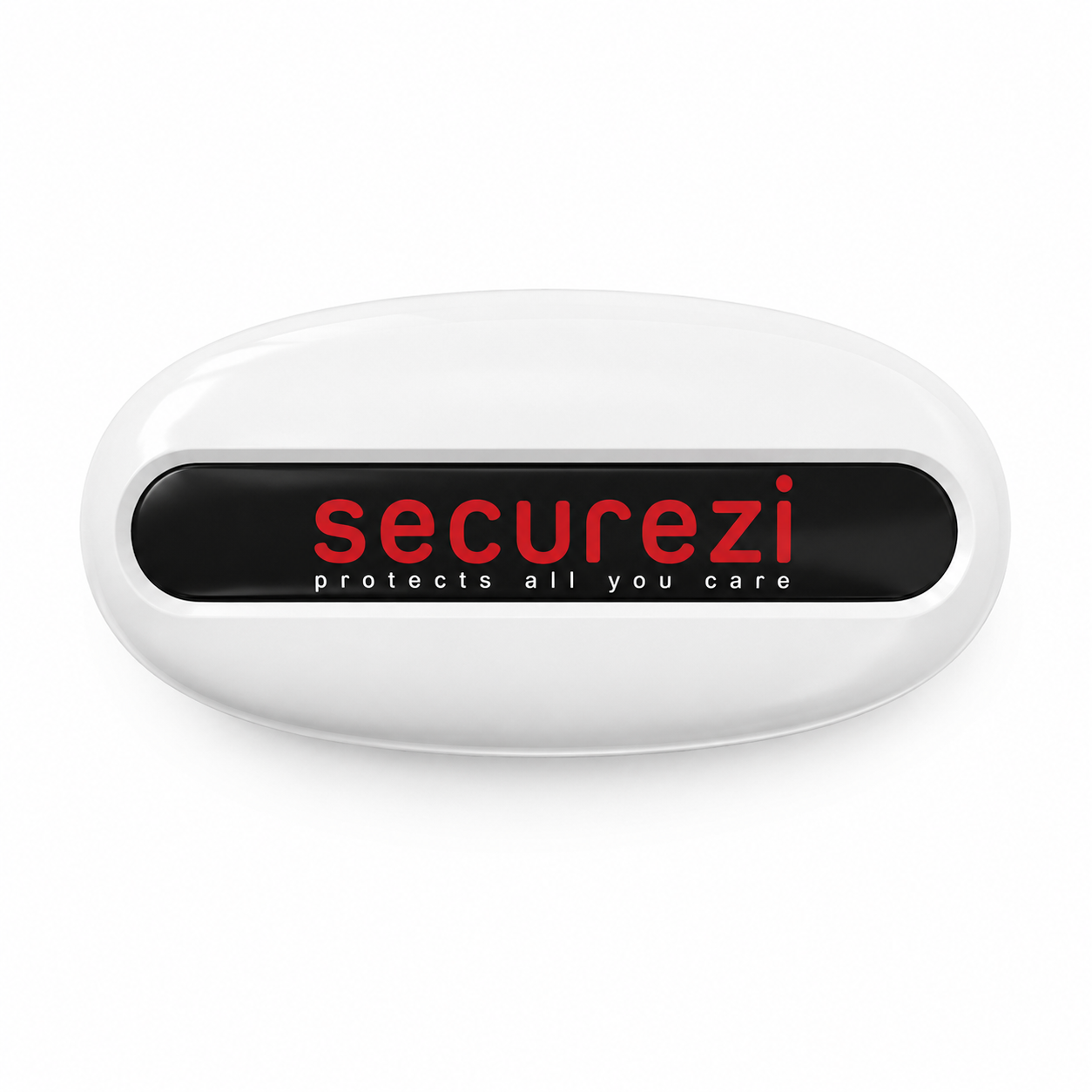
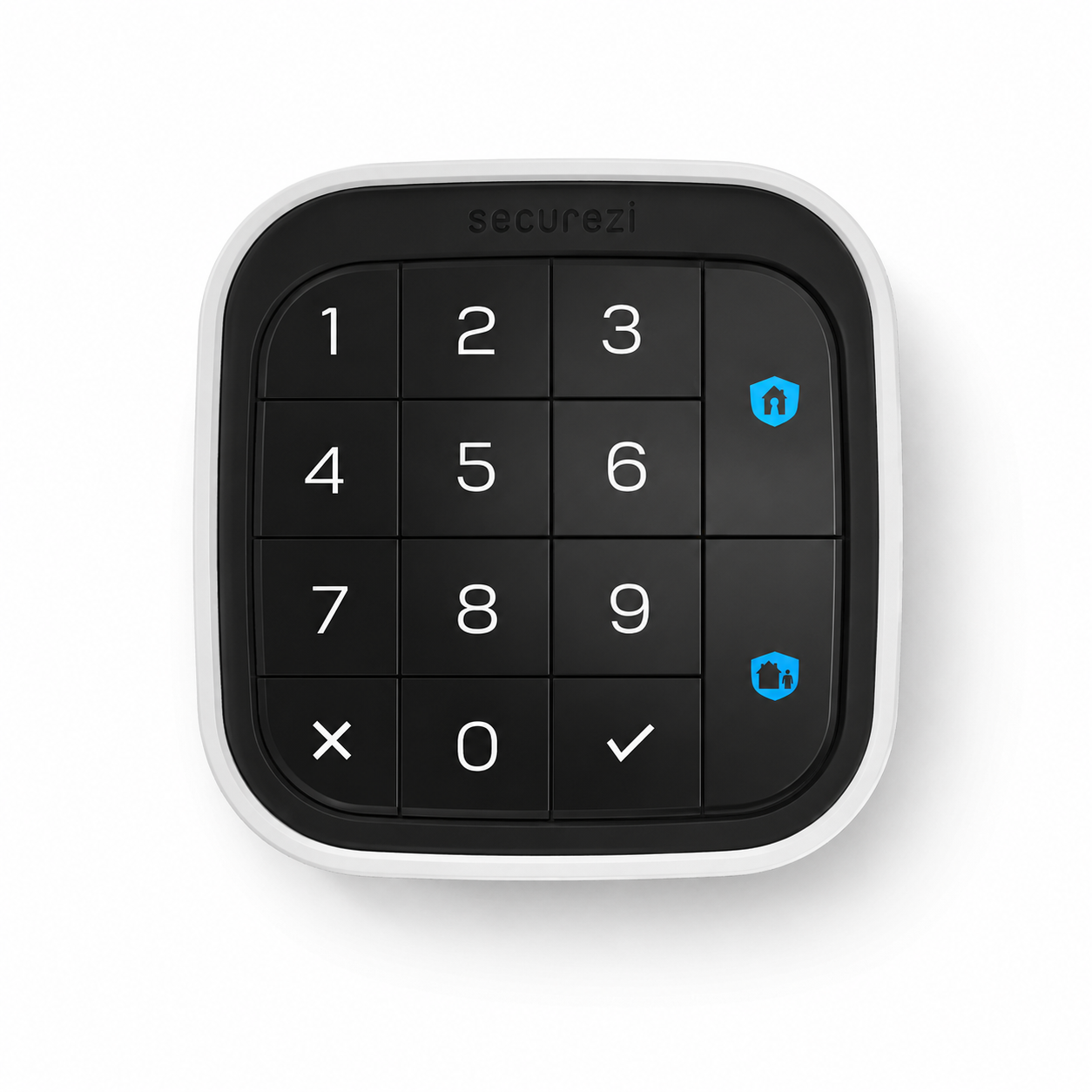
Designing technology this capable without letting it look technical was the central tension of the project — every feature added pressure to add visual complexity, and every design decision pushed back against that pressure. Getting the keyfob-based control system right meant designing for a user the rest of the industry had stopped designing for at all.
The product never made it past prototype and pilot stage. The idea was sound enough to earn a MoMA Store placement and an Apple HomeKit license — but a startup is more than its design, and Securezi didn't receive the financial backing a venture this ambitious needed to reach the market at scale. It was a venture genuinely ahead of its time, and that timing is ultimately what it couldn't overcome.
Securezi never reached full commercial launch, but the design work stands on its own: a HomeKit-licensed security system that proved invisible, accessible hardware was possible in a category that had never prioritized either.