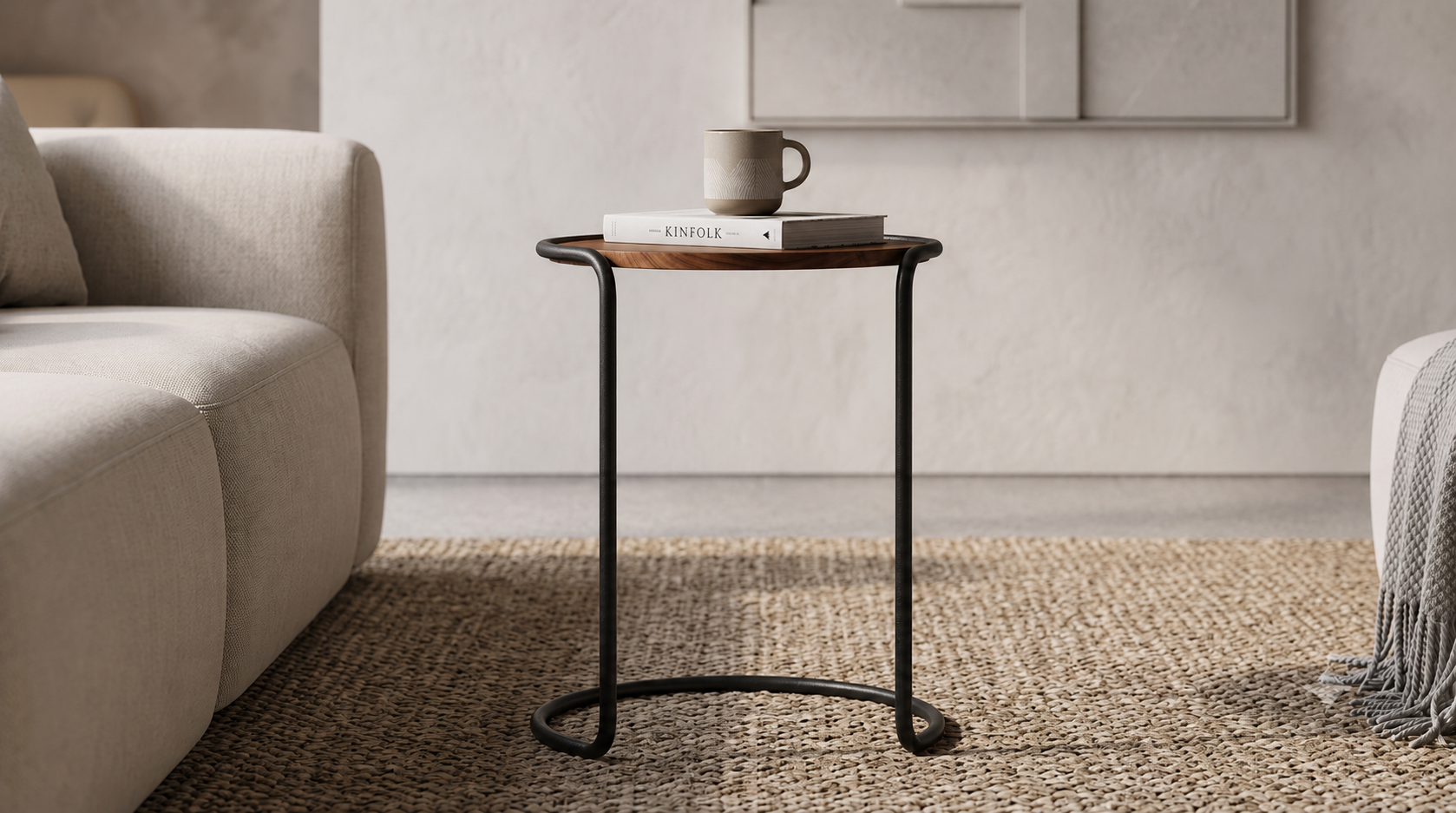
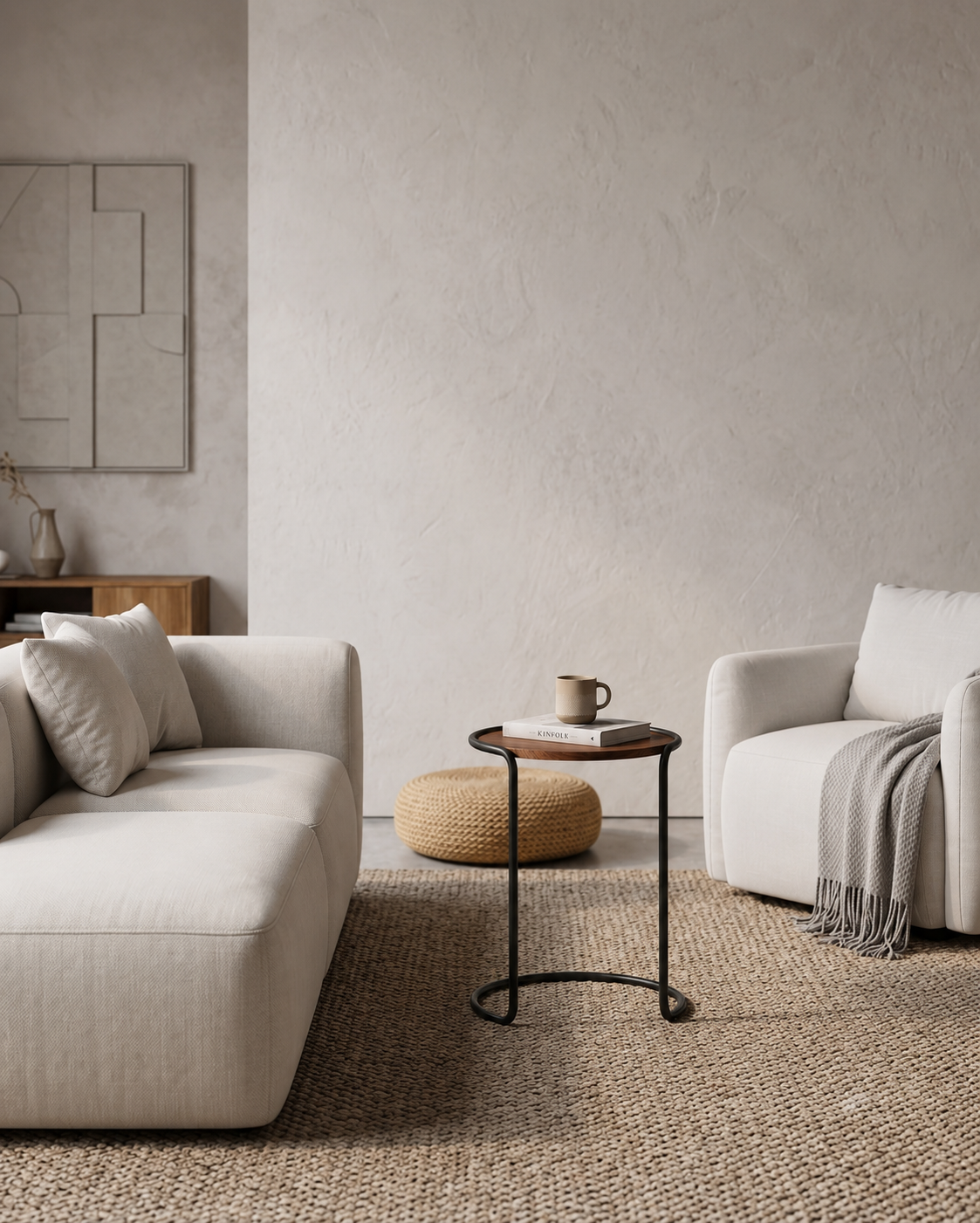
Three tables from one module — the same piece, nested into itself by geometry alone. No different sizes. No separate tooling. Just one shape that knows how to stack.
Traditional nesting tables require three separate products — large, medium, small — each a different size, each with its own tooling, its own production run. Jar takes a different route entirely: one module, designed with a geometry precise enough that three identical pieces nest inside each other without modification.
It's a personal project, produced and in daily use at home. Available to order.
The starting point was a frustration with the nesting table category's accepted logic: why does a set of three tables have to be three different objects? If the geometry is designed precisely enough, the same piece can nest inside itself — creating the stacking effect through form rather than through scale.
The real engineering work was in solving that geometry — finding the exact angles and proportions that allow one module to slide cleanly inside another. The hardest part wasn't the design itself: it was communicating this unconventional approach to manufacturers who had never been asked to make a product this way.
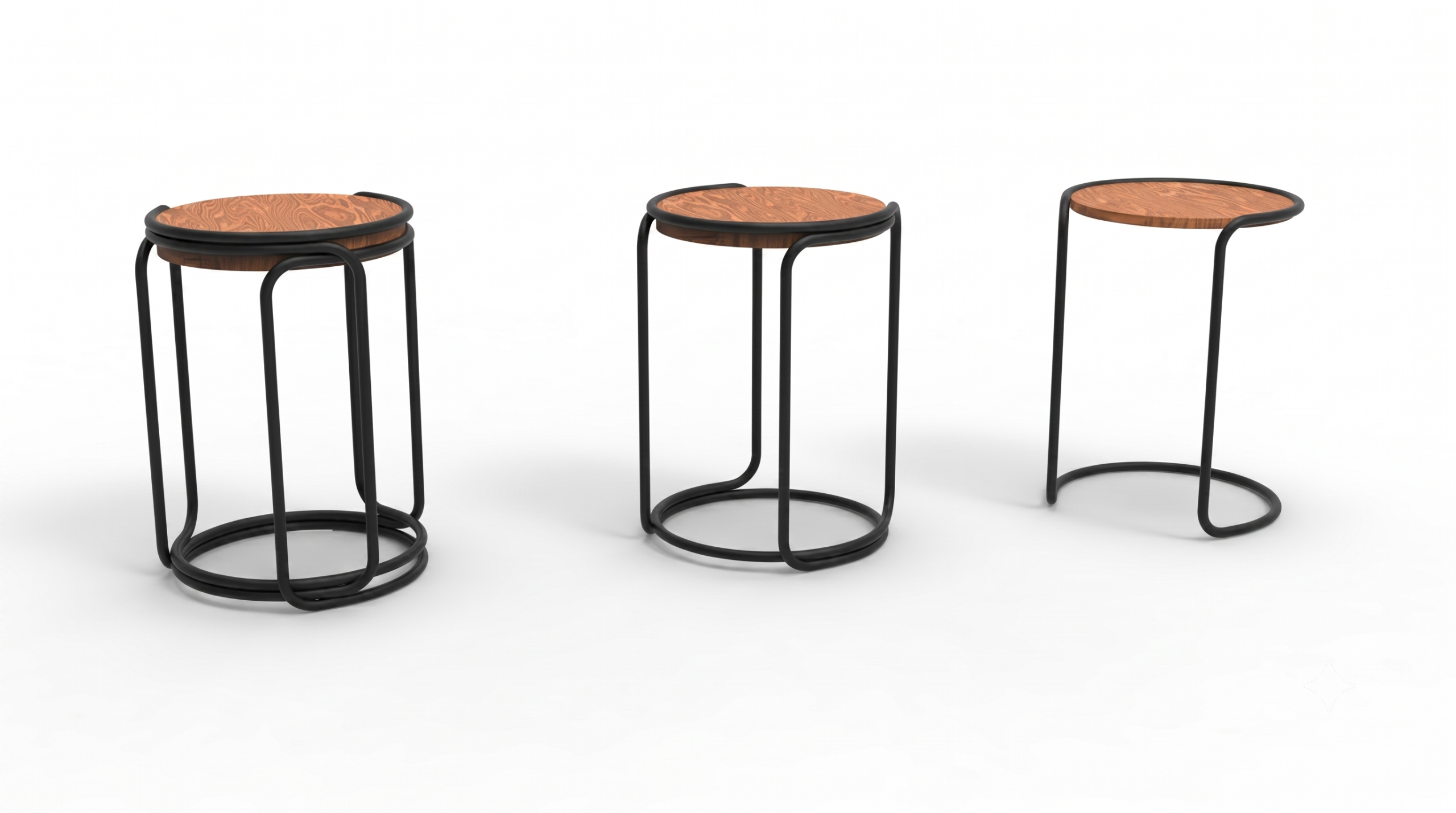
Three tables. One mold. Zero compromise.
Idea
A nesting table set that requires only one module — not one design in three sizes, but one piece that nests with itself. You can buy one and use it as a side table, or buy three and use them as a full nesting set. The number is the owner's choice, not the product's constraint.
Form
Black metal tube legs engineered to a geometry precise enough that identical units nest cleanly inside each other — the visual effect of three different-sized tables, achieved through one set of proportions. The wooden top is available in different colors, adapting to the room's existing palette without redesigning the product.
The leg design also allows the table to slide under sofas and armchairs — making it a serving table as easily as a side table, without any reconfiguration.
Function
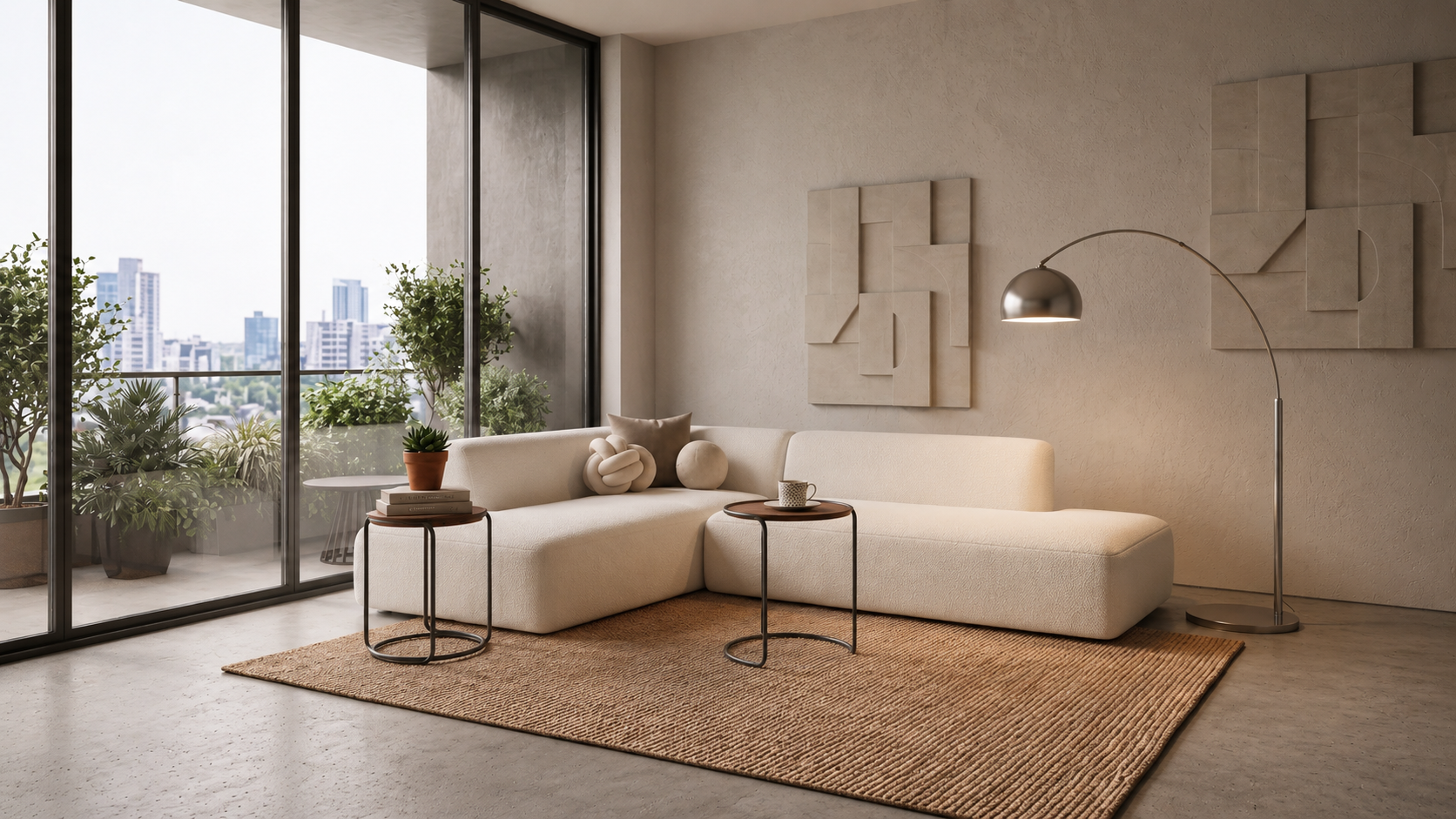
As a standalone piece, Jar works as a side table or a serving table that tucks under seating. As a set of two or three, it becomes a nesting arrangement that reads like a curated collection rather than a matched set. The modules don't have to stay together — they can be distributed around a room independently.
Differentiation
Every nesting table set on the market is three different products sharing a design language. Jar is one product that multiplies itself. That's a fundamentally different manufacturing logic — one mold, one production run, infinite combinations — and it's a fundamentally different ownership experience: you decide how many you need, and you can always add one more.
Impact
Produced, validated, and in daily use. Samples exist. The geometry works. Available to order on request — a personal project that crossed the line from idea to object, and stayed there.
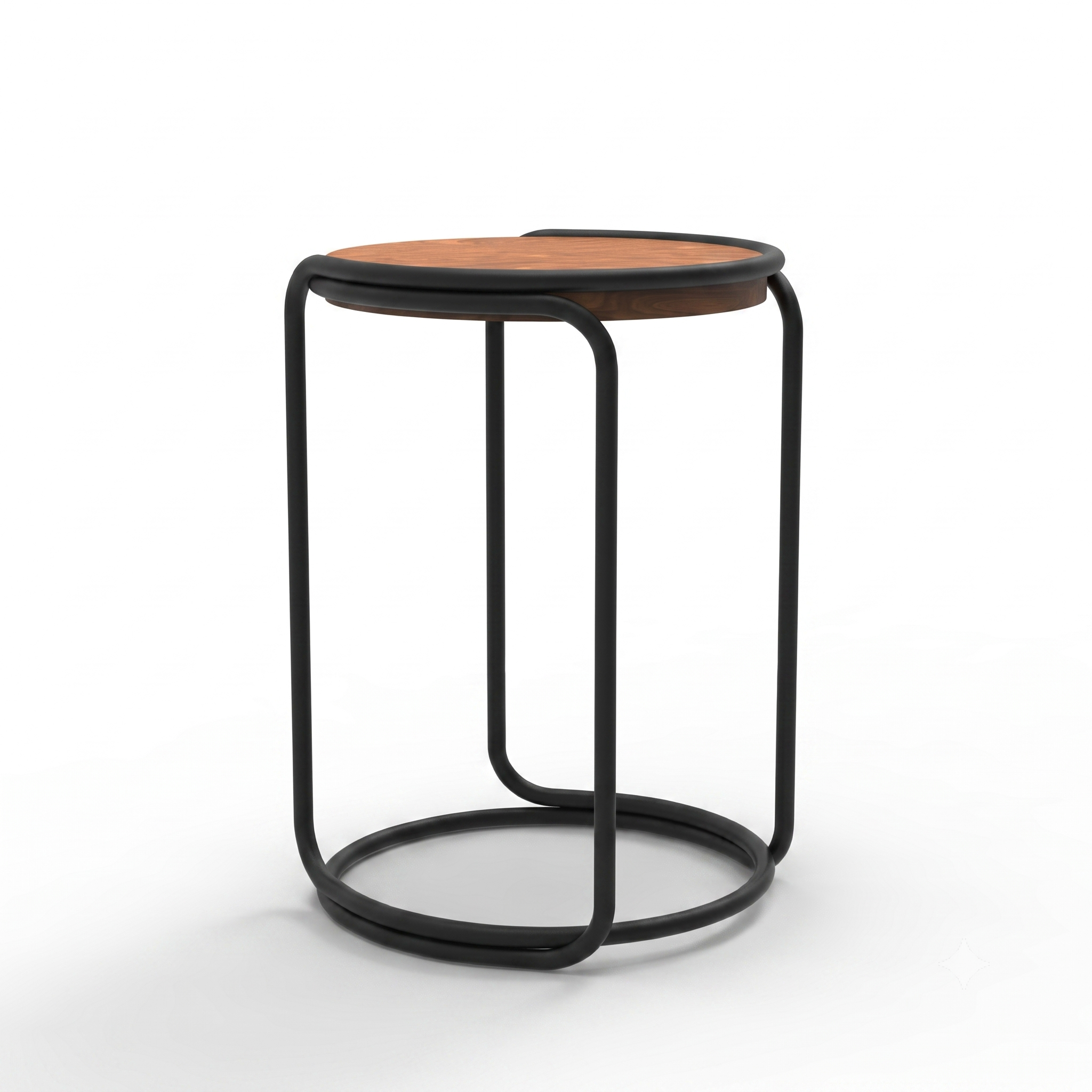
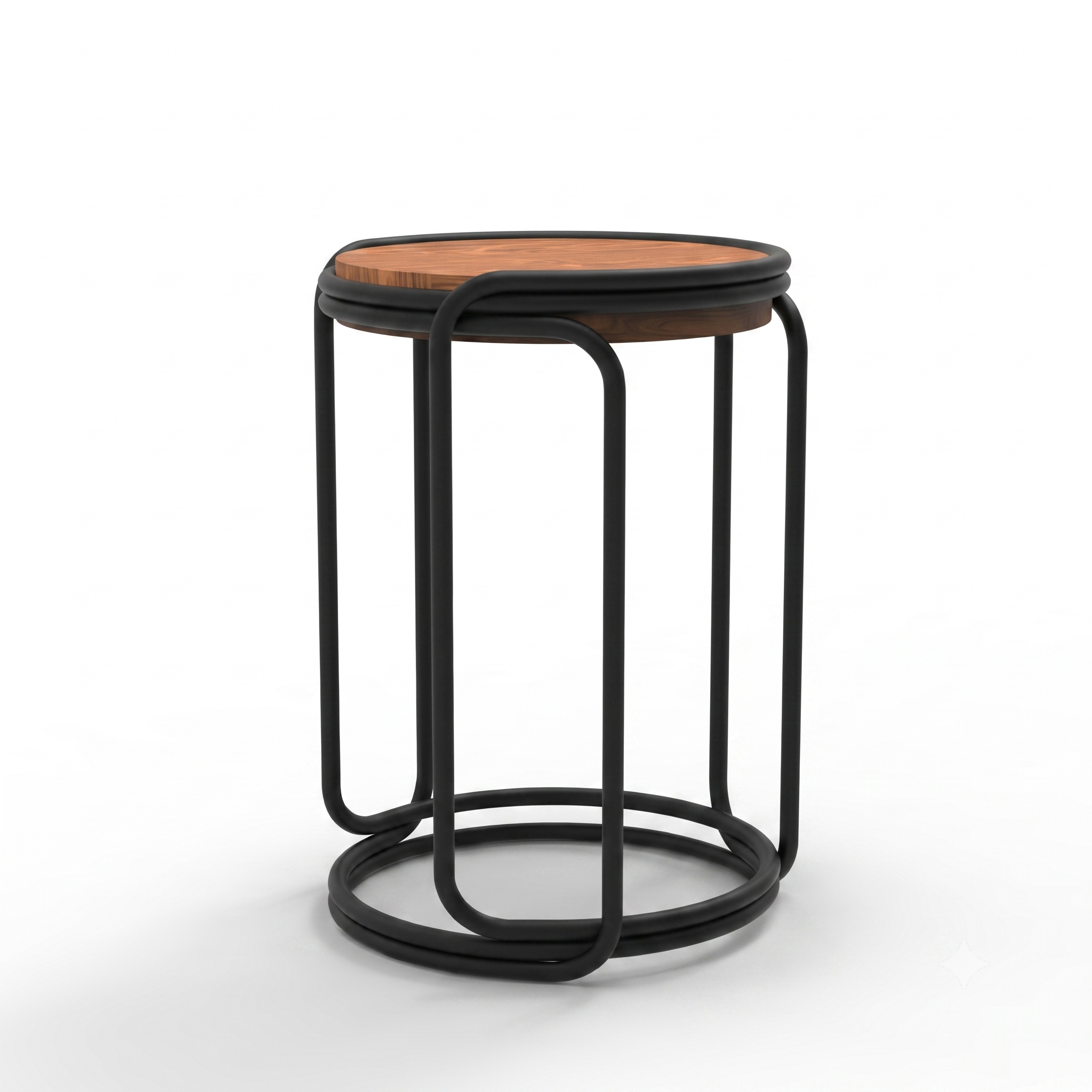
The geometry problem was satisfying to solve — finding the exact proportions that let one module nest cleanly inside an identical copy is a precise, rewarding kind of engineering. The design process itself was comfortable.
What took real time and patience was the conversation with manufacturers. Explaining that three "different" tables were actually one table — and that this was a feature, not an error — required persistence. Most production processes are built around variation, not repetition of a single unusual shape. Once the manufacturer understood what the geometry was doing, the rest followed.
Jar exists, nests, and works exactly as designed. A personal project built on a single geometric insight — that one shape, done precisely enough, can do the job of three.
Produced and available to order. Get in touch to bring Jar into production.